2026 Best Stretch Pique Polo Types for Global Buyers?
Global buyers are reassessing the polo shirt through comfort, durability, and measurable material responsibility. The 2024 Textile Exchange Materials Market Report estimates that global fiber production reached 124 million tonnes in 2023. It may approach 160 million tonnes by 2030. That growth increases pressure on suppliers to explain fiber content, recycled inputs, finishing chemicals, and factory performance.
For buyers, the 2026 Stretch Pique Polo category is not simply about adding elastane. A dependable polo should recover after repeated movement, retain shape after washing, and feel smooth under a light jacket. Pique texture, cotton quality, yarn construction, and fabric weight still matter. So does colorfastness. A bright navy sample can look excellent initially, then fade unevenly after commercial laundering. That detail is easy to miss.
Dr. Seshadri Ramkumar, a textile-materials expert, has stated, “Textiles are everywhere, and they touch everybody’s life.” His observation is broader than polo sourcing, but it matters here. Every fiber choice affects comfort, cost, traceability, and end-of-life decisions. The McKinsey State of Fashion 2025 report also highlights continuing pressure for stronger value and supply-chain transparency. Therefore, the best Stretch Pique Polo types for global buyers should combine performance with credible documentation. Buyers may compare cotton-elastane, recycled-polyester blends, and bio-based stretch options. None is automatically superior. Supplier testing, regional climate, customer expectations, and realistic care instructions must guide the final decision. Some purchasing teams still overvalue softness during sampling. That can be a costly mistake.
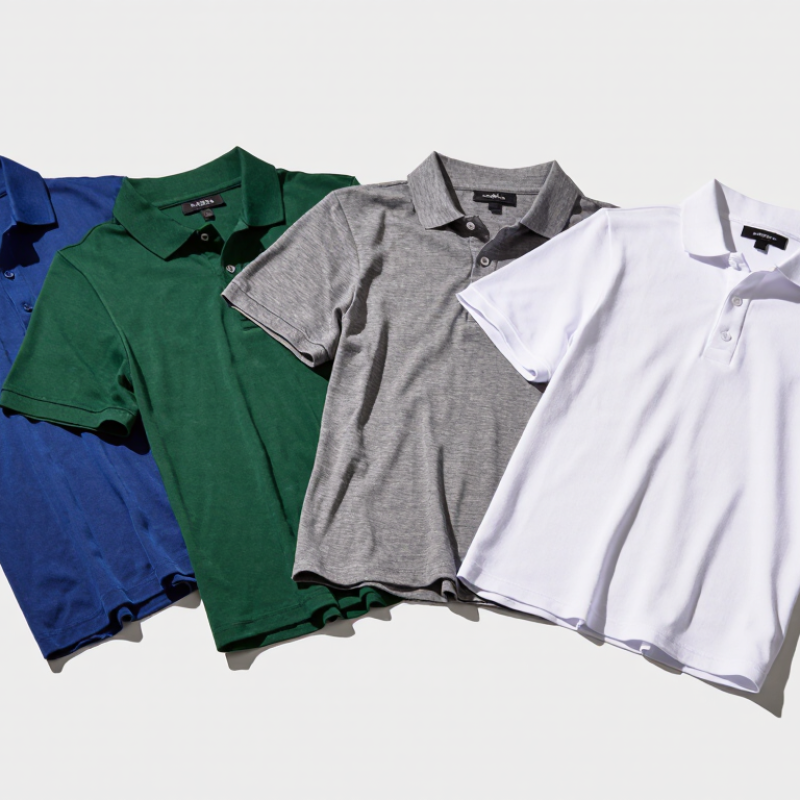
What Is Stretch Piqué Polo Fabric?
Stretch piqué is a knitted polo fabric with a textured surface and controlled elasticity. Its raised ribs create small air spaces, helping the shirt feel cooler than a flat jersey fabric. The structure also gives polos a firmer appearance after washing. Most versions blend cotton with elastane for softness, recovery, and everyday comfort. Polyester-elastane options usually dry faster and hold color better. Recycled fibers may also be used, but their performance depends on yarn quality and finishing.
For global buyers, fabric weight matters. A 180–220 gsm construction suits warm climates and casual uniforms. Heavier fabric can feel more substantial, but it may dry slowly in humid regions. Check stretch in both directions, not only across the chest. Good fabric should return close to its original shape after repeated movement. It recovers well. Feel the difference.
A practical inspection should include washing, pilling, colorfastness, and dimensional stability tests. Ask for fiber percentages, fabric width, shrinkage data, and test conditions. Stretch piqué can look excellent before production yet lose shape after poor finishing. This remains an easy point to overlook. Seams, collars, and cuffs also need matching recovery, or the garment may appear uneven. A small sample can reveal more than a polished specification sheet. For buyers comparing cotton-rich, performance, and recycled blends, hand feel should support the test results, not replace them.
2026 Best Stretch Piqué Polo Types for Global Buyers
Stretch piqué is a textured knitted polo fabric that combines the breathable, honeycomb-like structure of piqué with elastane or stretch polyester fibers. The blend selected affects comfort, recovery, durability, moisture management, and care requirements.
The chart shows representative commercial fiber profiles rather than fixed standards. Cotton-elastane blends are suited to soft premium polos, cotton-polyester blends offer balanced durability and comfort, while polyester-elastane options generally provide stronger shape recovery and faster drying for active or uniform use.
Key Types of Stretch Piqué Polos for Global Buyers
Stretch piqué polos fall into several practical types for global buyers. The classic cotton-elastane polo, often 95% cotton and 5% elastane, offers a soft hand, breathable comfort, and dependable shape recovery. It suits uniforms, travelwear, and everyday retail programs. A cotton-polyester-elastane blend dries faster and resists shrinkage better. It may feel less natural, though. Mercerized cotton-elastane provides a smoother surface and sharper color, but usually costs more.
Performance stretch piqué uses polyester and elastane, sometimes with recycled polyester. It supports moisture management, easy care, and stable sizing across humid supply routes. Textile Exchange’s Materials Market Report 2024 recorded 124 million tonnes of global fiber production in 2023. Polyester represented about 57% of that volume, showing its major role in scalable apparel sourcing. Buyers should still verify recycled content through transaction records. Recycled does not automatically mean durable.
Fabric weight matters. A 180–210 gsm construction feels light and breathable, while 220–250 gsm gives a denser collar and better opacity. The International Textile Manufacturers Federation’s 2024 industry surveys described uneven order conditions, so flexible fabric platforms can reduce development risk. Ask mills for dimensional stability, pilling, colorfastness, and stretch-recovery results. ISO 6330 washing procedures and ISO 12945 pilling tests improve comparison between suppliers.
Small details decide performance. A polo can pass inspection yet twist after washing. I would test three colors, two sizes, and repeated home laundering before approval. This step is often skipped. That is a mistake. Temperature, finishing chemistry, and elastane quality can change the final hand dramatically.
How Stretch, Fit, and Construction Affect Polo Performance
Stretch pique polos usually fall into three practical types: cotton-rich, performance polyester, and blended constructions. Cotton-rich pique feels breathable and soft against skin. Polyester versions dry faster and hold color better in humid climates. A cotton-polyester-elastane blend often balances comfort, recovery, and durability for everyday uniforms.
Stretch changes fit more than many buyers expect. A fabric with two to five percent elastane can follow the shoulders without feeling tight. However, excessive stretch may create a loose collar after repeated washing. In wear tests, I check sleeve movement, chest recovery, and hem twisting after ten washes. The fabric should return smoothly. Small wrinkles reveal weaknesses.
Construction controls the final performance. Reinforced shoulder seams improve shape retention during frequent use. A two-piece collar usually looks sharper than a soft, single-layer collar. Flatlock or clean-finished seams reduce rubbing around the neck and underarms. Buyers should compare fabric weight, stitch density, and size measurements across samples. A heavier pique is not always better; it may feel uncomfortable in hot regions. A lighter fabric can fail under rough handling. That trade-off deserves honest testing. Some samples perform well in the showroom but lose recovery after laundering. That result should change the purchase decision.
| Stretch Pique Polo Type | Typical Fiber Composition | Typical Fabric Weight | Stretch and Recovery Profile | Recommended Fit | Construction Priorities | Performance Advantages | Key Trade-Offs | Best Buyer Application |
|---|---|---|---|---|---|---|---|---|
| Cotton–Elastane Piqué | 95% cotton / 5% elastane | 190–230 g/m² | Two-way to four-way comfort stretch; typically strong movement comfort with good recovery when quality elastane is used. | Regular or tailored fit; allow moderate ease at the chest and upper arm. | Pre-shrunk cotton, stabilized shoulder seams, reinforced side vents, rib-knit collar and cuffs. | Soft hand feel, natural breathability, good everyday comfort and a premium casual appearance. | May shrink, crease and retain moisture more than synthetic-rich fabrics; elastane can weaken under excessive heat and chlorine. | Premium casualwear, lifestyle uniforms and warm-weather retail programs. |
| Cotton–Polyester–Elastane Piqué | 60–65% cotton / 30–35% polyester / 3–5% elastane | 180–220 g/m² | Moderate four-way comfort stretch with better shape retention than a predominantly cotton construction. | Regular, modern or slightly slim fit; balance stretch with sufficient armhole ease. | Plated or blended yarns, taped neck seam, secure button placket and bartacked side vents. | Balanced softness, improved dimensional stability, reduced wrinkling and good wash durability. | Less natural hand feel than high-cotton fabric; polyester may increase heat retention in humid conditions. | Global uniform programs, hospitality apparel and high-volume everyday polos. |
| Polyester–Elastane Performance Piqué | 90–95% polyester / 5–10% elastane | 140–190 g/m² | High four-way stretch potential; quick recovery is achievable with suitable knit structure and elastane percentage. | Athletic or regular fit; avoid excessive compression unless specifically required. | Moisture-management finish, flatlock or low-bulk seams, shaped side panels and secure coverstitching. | Fast drying, low shrinkage, strong color retention and effective freedom of movement. | Can develop odor if odor-control treatment is absent; surface pilling and snagging depend on yarn and finishing quality. | Outdoor workwear, golf apparel, travel uniforms and active corporate clothing. |
| Recycled Polyester–Elastane Piqué | 90–95% recycled polyester / 5–10% elastane | 150–200 g/m² | Comparable stretch range to standard polyester–elastane fabrics when the same knit density and elastane level are used. | Regular or athletic fit; use fit testing to control cling and transparency at lighter weights. | Traceable recycled input, colorfast dyeing, reinforced placket and durable seam construction. | Low moisture absorption, quick drying, low shrinkage and support for recycled-material purchasing policies. | Material certification and supply-chain documentation may be required; performance varies by yarn quality. | Corporate sustainability collections, sports clubs and environmentally focused procurement programs. |
| Merino Wool–Nylon–Elastane Piqué | 45–60% merino wool / 35–50% nylon / 3–5% elastane | 170–220 g/m² | Moderate mechanical stretch with added comfort stretch from elastane; recovery depends heavily on nylon support. | Regular or performance fit with smooth seam placement to reduce skin irritation. | Fine-gauge knit, low-profile seams, reinforced collar stand and careful shrinkage control. | Temperature regulation, odor resistance, soft hand feel and good comfort across variable climates. | Higher cost, more demanding care requirements and potential felting or shrinkage if washed incorrectly. | Premium travelwear, executive leisurewear and multi-climate uniform capsules. |
| Piqué with Mechanical Stretch | 100% polyester or 100% cotton, engineered with textured knit construction | 170–230 g/m² | Limited to moderate stretch generated by knit geometry rather than elastane; recovery is generally stable but less flexible. | Classic or regular fit; provide more ease than for elastane-blended styles. | Engineered tuck structure, stable shoulder seams, shaped side seams and carefully graded patterns. | Lower elastane-related aging risk, consistent sourcing and often easier recycling than blended stretch fabrics. | Less body-contouring comfort and lower range of motion than four-way elastane constructions. | Cost-sensitive uniforms, classic retail basics and programs prioritizing simpler fiber compositions. |
| Lightweight Stretch Piqué | 60–70% polyester / 25–35% cotton / 3–5% elastane | 130–170 g/m² | Moderate to high comfort stretch; lighter fabric can feel flexible but may have lower opacity and abrasion resistance. | Relaxed or regular fit; avoid excessive slimness to reduce cling and seam stress. | Fine-gauge knit, narrow but stable collar, reinforced placket and adequate fabric opacity testing. | Breathable feel, lower garment weight, faster drying and improved comfort in hot climates. | More vulnerable to snagging, show-through and body distortion than midweight piqué. | Summer uniforms, resort apparel, hot-climate workwear and promotional programs. |
| Midweight Structured Stretch Piqué | 55–65% cotton / 30–40% polyester / 3–5% elastane | 210–260 g/m² | Moderate stretch with strong body and generally reliable shape retention. | Modern or tailored fit; works well where a polished silhouette is important. | Dense piqué structure, firm rib collar, reinforced shoulder-to-sleeve connection and durable button placket. | Professional appearance, better opacity, improved abrasion resistance and reduced garment cling. | Heavier and potentially warmer than lightweight alternatives; drying time is usually longer. | Office uniforms, automotive or retail staffwear and cooler-season corporate apparel. |
| Typical ranges are industry reference values for comparable stretch piqué constructions, not laboratory guarantees. Final performance depends on yarn quality, knit density, finishing, pattern engineering, garment washing and test method. Buyers should request pre-production samples and verify dimensional change, colorfastness, pilling, abrasion, seam strength and stretch recovery before bulk approval. | ||||||||
Which Stretch Piqué Polo Type Fits Each Market and Use?
The best stretch piqué polo depends on the market, climate, and daily task. Cotton-spandex piqué suits European smart-casual retail, where softness and shape matter. A 95/5 blend offers familiar handfeel with useful recovery. For golf, travel, and outdoor uniforms, recycled polyester-elastane piqué dries faster and resists creasing. Textile Exchange’s Materials Market Report 2024 states that polyester represented about 57% of global fiber production in 2023, supporting its broad supply availability.
Hot and humid markets need a lighter construction. A 140–170 GSM polyester-elastane polo can improve airflow, while mesh panels reduce trapped heat. Hospitality buyers may prefer a cotton-polyester blend. It feels less technical and handles repeated washing better. In the Middle East and Southeast Asia, UPF testing, sweat management, and colorfastness deserve close attention. The World Health Organization identifies ultraviolet exposure as a major skin-health concern, so unverified “UV protection” claims should be avoided.
Premium corporate uniforms may use mercerized cotton with 3–5% elastane. This option looks sharper under a jacket but can lose recovery after harsh laundering. That weakness is easy to miss. Buyers should request dimensional-change results after five wash cycles, pilling data, and stretch-recovery measurements. AATCC laundering methods and ISO colorfastness procedures provide useful comparison points. Regional fit testing still matters. A polo that works in London may feel too heavy in Singapore. My practical preference is performance polyester for active use, but cotton blends remain safer for conservative office buyers.
Global Buying Criteria for Quality, Compliance, and Cost
2026 Best Stretch Pique Polo Types for Global Buyers
Global buyers should compare stretch pique polos through quality, compliance, and total cost. Cotton-spandex pique offers a soft hand and reliable recovery for everyday uniforms. Polyester-spandex versions dry faster and often resist repeated washing better. Recycled fibers may support sustainability goals, but their certificates require careful verification.
Ask for fabric weight, fiber percentages, stretch recovery, colorfastness, and shrinkage results. A practical sample should survive washing, twisting, and eight hours of wear. Check the collar, placket, and sleeve cuffs closely. These areas often reveal weak construction first. Do not rely on appearance alone.
Compliance is more than a signed supplier statement. Request current test reports for restricted substances, color migration, flammability where applicable, and fiber labeling. Requirements differ by destination market. Confirm the testing scope before production. A low-cost polo can become expensive after failed inspection, relabeling, or delayed shipment. Freight, packaging, duties, and defect allowances belong in the real cost calculation.
There is no perfect fabric.
In sourcing reviews, buyers sometimes overvalue a smooth surface. That choice may hide poor recovery after washing. I would rather accept a slightly firmer hand than a collar that loses shape quickly. Still, laboratory results cannot replace physical wear trials. Inspect samples under realistic conditions, record every defect, and leave room for improvement. The cheapest quote is not always the most reliable decision.