Who Are the Best Bulk Sunflower Seed Manufacturers in 2026?
Choosing among the best bulk sunflower seed manufacturers in 2026 takes more than comparing prices. A bright, clean sample can still conceal inconsistent sizing, high foreign material, or weak lot traceability. Buyers should examine origin, harvest year, moisture specifications, cleaning methods, packaging, and shipment records. Ask for current certificates and representative lot samples. Details matter.
FAOSTAT’s 2022 production data records roughly 55 million tonnes of sunflower seed worldwide, underscoring the scale and geographic spread of supply. USDA Foreign Agricultural Service reports, including Oilseeds: World Markets and Trade, track crop balances and trade flows that buyers can use to assess market context. Production totals do not prove a supplier’s quality. They help frame better questions.
W. Edwards Deming, a quality-management expert, is widely credited with the line, “In God we trust; all others must bring data.” That is a useful standard for evaluating Buy Bulk Sunflower Seeds Manufacturers: request measurable specifications, recent test results, and evidence that documents match the delivered lot. A polished brochure is not enough. There is a practical wrinkle: even thorough paperwork cannot replace independent checks on a shipment. This guide compares manufacturers through sourcing transparency, product consistency, capacity, and buyer support, while recognizing that the strongest supplier for one business may not suit another.
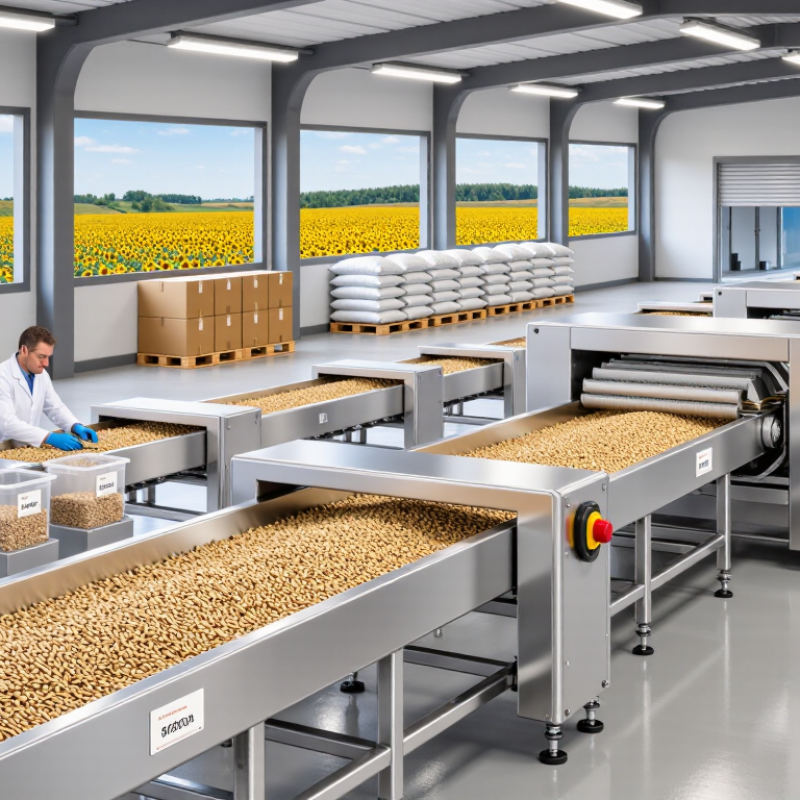
Define the Best Bulk Sunflower Seed Manufacturer by Capacity, Quality, and Traceability
The best bulk sunflower seed manufacturer is not simply the one with the largest plant. Buyers should compare verified annual capacity with seasonal demand, shipment consistency, and backup storage. USDA Foreign Agricultural Service’s October 2024 Oilseeds: World Markets and Trade report estimated 2024/25 global sunflowerseed production at about 52.4 million metric tons. That scale makes origin, harvest year, and lot-level records essential when markets tighten. Ask for recent capacity figures, sample results, and traceability documents linking each shipment to its source. Look for documented controls for moisture, foreign material, and aflatoxins, plus a clear process for handling rejected lots. Small details matter.
Tips: Request a sample from the same crop and grade you plan to buy. Check that the certificate of analysis matches the lot number on the bags or shipping papers. Confirm whether the supplier can trace origin and processing dates quickly, not just promise to do so. Food-safety systems aligned with ISO 22000 or recognized GFSI benchmark programs can support consistent controls, but certificates do not replace independent verification. A tidy audit file is reassuring; it is not proof that every shipment will be flawless. That distinction is easy to overlook.
Global Supply Context: USDA Estimated 55.4 Million Tonnes of Sunflowerseed in 2023/24
USDA estimated global sunflowerseed production at 55.4 million tonnes in 2023/24. That figure gives bulk buyers a useful measure of crop scale, not a guarantee of easy supply. Harvests are spread across regions, and local weather, storage, and processing capacity can affect what reaches export markets. Scale matters.
For buyers comparing bulk suppliers, the distinction between sunflowerseed and finished products is important. The USDA figure covers seed production; it does not show how much is available as food-grade kernels or oil. Ask suppliers for the crop year, origin, product specifications, and recent quality test results. Moisture levels and foreign material can affect storage and processing, even when a shipment looks clean in a sample.
A large global crop can support a broad supply base, but it cannot replace shipment-level checks. Review traceability records and confirm packaging, transport conditions, and delivery windows before placing an order. I would be cautious about treating one season’s estimate as a forecast for the next. Forecasts can shift, and the production number alone leaves real questions unanswered.
Compare 2026 Manufacturers by Origin, Processing Scale, Certifications, and MOQ
The best bulk sunflower-seed manufacturer depends on origin, processing capacity, and the buyer’s quality needs. FAOSTAT’s Crops and livestock products database reports roughly 55 million tonnes of sunflower-seed production worldwide in 2022. Major sourcing regions include the Black Sea area, the European Union, and Argentina. Ask suppliers to identify the crop year and country of origin, not just the shipping port. Traceability matters.
Compare processing scale through documented throughput, cleaning capacity, and lot consistency. A large facility may offer steadier supply, but its minimum order quantity (MOQ) can exceed a small buyer’s needs. Request a recent certificate of analysis showing moisture, foreign material, and relevant microbiological results. Check that certificates such as FSSC 22000 or ISO 22000 cover the actual processing site and product scope. A certificate alone is not proof of each shipment.
MOQs vary with packaging, cleaning level, and whether seeds are hulled or unhulled; ask for figures by packaging format and shipment size. For a first order, request a representative sample and compare it with the delivered lot. I would also ask how the supplier handles crop-year changes. That detail is easy to overlook, and even a strong supplier may not make every season identical.
Assess Bulk-Grade Quality Through Moisture, Purity, Oil Content, and Lab Testing
Bulk-grade sunflower seeds should be judged by measurable traits, not appearance alone. Moisture affects storage stability, so compare results with the agreed contract specification and intended storage conditions. A calibrated meter offers a quick check, but testing a representative sample matters more than testing one handful. Small differences can signal uneven drying. They can also come from sampling error.
Purity checks should record sound seed, broken kernels, hull fragments, and other foreign material. Ask how the sample was drawn and whether results are reported by weight. A clean sample can still hide variation across a shipment. Inspecting several bags helps reveal it. Oil content is another useful measure, especially when seeds are bought for processing. Confirm whether the result is reported on an as-is or dry-matter basis; those figures are not directly comparable.
Request a lot-specific laboratory report with test methods, dates, and sample identification. Independent lab results can support supplier data, particularly when values sit close to a purchasing limit. Some rapid instruments estimate oil content well, but calibration and reference methods matter. No single number tells the whole story. I would also compare results from repeat samples when a shipment looks inconsistent. It takes extra time, and may still leave questions, but it makes a buying decision more defensible.
Who Are the Best Bulk Sunflower Seed Manufacturers in 2026? — Assess Bulk-Grade Quality Through Moisture, Purity, Oil Content, and Lab Testing
Use this supplier-evaluation framework to compare bulk sunflower seed offers. The figures below are practical buyer screening targets, not universal legal limits or claims about any specific manufacturer. Confirm the required specification, test basis, and destination-market rules for each shipment.
| Evaluation Dimension | Practical Screening Target | What to Verify with the Supplier | Evidence to Request |
|---|---|---|---|
| Moisture | For many storage and handling programs, buyers may specify a maximum near 8% by weight. Set the limit according to intended storage duration, transport conditions, and contract requirements. | Confirm the reported result, test method, sampling point, and whether the result applies to the shipped lot. Moisture can affect storage stability and the risk of deterioration. | Lot-specific certificate of analysis (COA); moisture result and method. ISO 665 is a recognized method for determining moisture and volatile matter in oilseeds. |
| Purity and foreign matter | Set a contract-specific purity requirement, commonly expressed as a percentage by weight. A buyer may use 98% or higher as an initial screening target, depending on seed type and end use. | Ask how the supplier defines “purity” and which materials count as foreign matter, broken seed, or other seed. Confirm that the percentage is calculated on the agreed basis. | COA with the test result and component definitions; representative sampling and inspection records. ISO 658 covers determination of impurities in oilseeds. |
| Oil content | Oil content varies by variety, growing conditions, and processing purpose. Oil-type sunflower seed may fall broadly around 40–50% on a dry-matter basis; compare offers only when the reporting basis is the same. | Check whether the result is reported as received or on a dry-matter basis, and whether it is a measured value or a guaranteed minimum. Match the specification to the intended use. | Lot-specific laboratory result and stated calculation basis. ISO 659 specifies a method for determining oil content in oilseeds. |
| Laboratory testing | Results should be traceable to a defined method, representative sample, and identified lot. Independent testing is useful for confirming contract-critical parameters. | Verify the laboratory’s identity, accreditation scope where applicable, sample handling, test date, and whether the reported lot number matches shipping documents. | Current COA; relevant method references; independent laboratory report or agreed pre-shipment inspection when required. |
| Lot consistency | Set acceptable tolerances for moisture, purity, oil content, and other contractual characteristics before ordering. Do not assume that one sample represents every future lot. | Compare results across recent lots and ask how batches are segregated, blended, sampled, and released for shipment. | Recent lot-level COAs, batch identification records, and documented quality-control procedures. |
| Storage and packaging | Packaging and storage conditions should protect seed from moisture pickup, contamination, pests, and physical damage during handling and transit. | Confirm packaging type, cleanliness, storage conditions, container loading practices, and any buyer requirements for liners or sealed packaging. | Packaging specification, loading inspection records, and shipment documents identifying the relevant lot. |
| Supplier comparison | Compare suppliers against the same written specification, sampling plan, test methods, and delivery terms. A low price alone does not establish bulk-grade quality. | Evaluate documented quality results, ability to meet agreed tolerances, traceability, and consistency of shipment records. | Signed product specification, sample COA, agreed sampling protocol, and pre-shipment quality documentation. |
Rank Shortlisted Suppliers by Export Reliability, Food-Safety Records, and Pricing
For a 2026 shortlist, rank bulk sunflower seed manufacturers by shipment evidence, food-safety records, and comparable delivered prices. Export reliability should lead: request three years of shipment records, on-time delivery rates, and documents matching each lot’s origin and weight. FAOSTAT reports global sunflower-seed production at roughly 57 million tonnes in 2022, showing a large but geographically concentrated supply base. That scale does not guarantee continuity. Ask suppliers how they handle harvest delays and port disruptions.
Food safety deserves a separate score. Review recent third-party audit results, lot traceability, cleaning records, and certificates of analysis for moisture, foreign matter, and microbiological risks. The Codex Alimentarius Commission’s hygiene principles emphasize controls throughout food production, not just a final inspection. Check whether test results identify the actual shipment lot. Paperwork can look tidy. Verify it.
Compare prices only after normalizing grade, packaging, origin, shipment terms, and payment conditions. USDA’s Oilseeds: World Markets and Trade reports track production, trade, and market conditions, useful context for judging unusual quotes. Build a simple scorecard: 40% export reliability 35% food safety 25% landed cost. Those weights are a starting point, not a law. A low quote may still cost more after delays, rejected lots, or extra testing.