Best Cardboard Sheets Supplier in China?
Finding the best Cardboard Sheets supplier in China requires more than comparing online prices. A reliable decision begins with product performance, manufacturing experience, and clear communication. Packaging buyers often need sheets that remain flat, cut cleanly, and resist crushing during storage. These details matter when cartons face humidity, stacking pressure, or long-distance shipping.
An experienced supplier should explain its paper grades, flute structures, thickness tolerances, and moisture-control methods. Ask for samples before approving a large order. Hold each sheet under practical conditions. Check its edges, surface finish, stiffness, and printing quality. A serious manufacturer can usually provide production photos, inspection records, sample reports, and export references. Certifications may also support credibility, but they should be verified rather than accepted at face value.
Small details reveal working standards. Does the supplier answer technical questions directly? Can it maintain consistent dimensions across batches? Does its packaging protect sheets from rain during loading? These questions help separate a dependable factory from a trading company with limited control. Price still matters, but the cheapest offer may create higher costs through waste, delays, or rejected goods. No supplier is perfect. Even strong manufacturers can face seasonal capacity pressure or material changes. Buyers should record these risks and agree on inspection points before production. With careful evaluation, transparent specifications, and tested samples, companies can choose a Chinese Cardboard Sheets supplier with greater confidence and fewer surprises.
What Are Cardboard Sheets? Types, GSM Ranges, and Common Applications
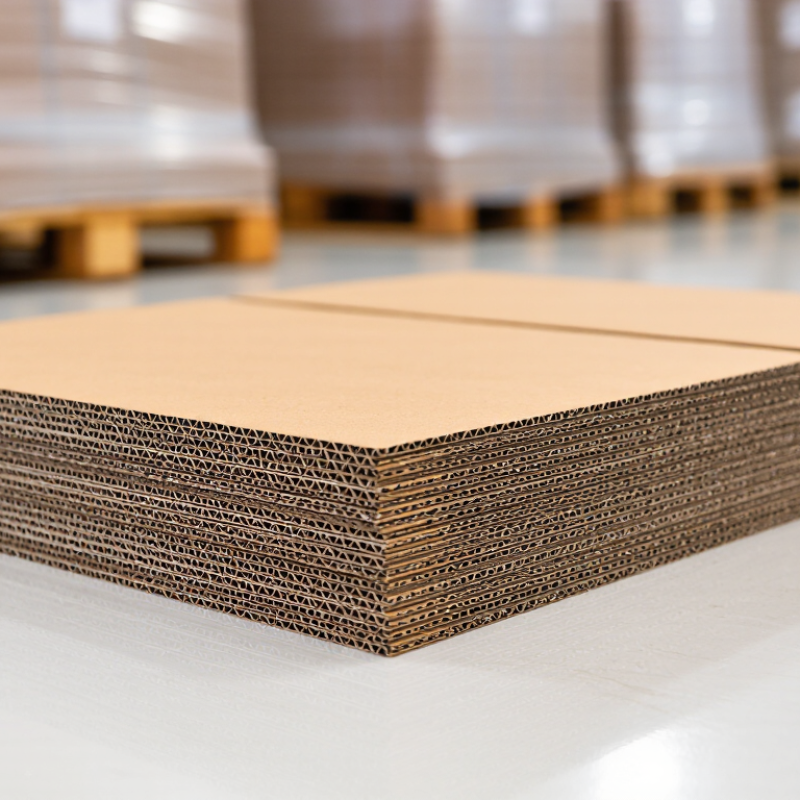
Cardboard sheets are flat, fiber-based materials made from pressed paper pulp. People often use “cardboard” broadly, although paperboard and corrugated board behave differently. Paperboard is dense and smooth. Corrugated board combines outer liners with a fluted inner layer for cushioning and stiffness. This structure matters when selecting a supplier in China. Ask for samples, a specification sheet, and production tolerances before ordering.
GSM means grams per square meter, indicating material weight rather than total strength. Lightweight paperboard commonly ranges from 180 to 350 GSM. Folding cartons often use 250 to 500 GSM sheets. Greyboard and rigid backing materials may range from 500 to 2,000 GSM. Corrugated liners frequently fall between 90 and 250 GSM, depending on the required performance. A higher GSM is not automatically better. Thickness, fiber quality, moisture resistance, and flute design also affect results.
Common applications include retail boxes, book covers, dividers, display panels, shipping cartons, and protective inserts. In practical packaging checks, edge compression and flatness deserve close attention. A sheet can look excellent yet warp in humid storage. That mistake is easy to underestimate. Request humidity-conditioned samples when the product will travel through changing climates. Check cutting accuracy, surface finish, print suitability, and recycled content documentation. Clear testing records make supplier comparisons more reliable.
Which Cardboard Grades Perform Best: 250–450 GSM and 3–7 mm Fluting Options
Best Cardboard Sheets Supplier in China?
For most shipping cartons, 250–450 GSM liners offer a practical balance between stiffness, printability, and cost. However, GSM alone does not predict box performance. Paper strength, moisture, flute height, and bonding quality often matter more. CEPI’s 2023 industry statistics recorded about 79.6 million tonnes of European paper and board production, showing the scale of this mature material sector. Yet large output does not guarantee consistent sheets.
Fluting from 3–7 mm covers several useful structures. Around 3–4 mm, single-wall boards provide good stacking efficiency and easier die-cutting. Near 5–7 mm, thicker profiles improve cushioning and vertical compression, especially for heavier products. FEFCO technical guidance distinguishes flute profiles by height and pitch, not by thickness alone. A supplier should provide edge crush test, burst strength, Cobb water absorption, and flat crush results. Ask for recent batch data.
In practical inspections, a 350 GSM outer liner with balanced medium can feel stronger than a 450 GSM board with weak bonding. That surprises buyers. It happens. Humidity also changes results; laboratory values may fall after storage in a damp warehouse. The International Corrugated Case Association emphasizes testing under controlled conditions, but real distribution is rarely controlled. I would request samples, condition them locally, and test loaded cartons for 24 to 48 hours. This step costs time, yet it exposes weaknesses that attractive specifications can hide.
Best Cardboard Sheets Supplier in China? - Which Cardboard Grades Perform Best: 250–450 GSM and 3–7 mm Fluting Options | Board construction | Typical liner basis weight | Approx. flute / board thickness | Relative performance | Common applications | Selection notes |
| Single-wall, C flute | 250–300 GSM per liner | About 3.5–4.0 mm | Balanced cushioning and stacking performance | General shipping cartons, household goods, and medium-weight products | A versatile option when both cushioning and printable outer surfaces matter. |
| Single-wall, B flute | 250–350 GSM per liner | About 3.0 mm; varies by specification | Good surface support and puncture resistance; less cushioning than taller flutes | Retail-ready packs, small appliances, and products needing a compact carton | Useful where a relatively smooth print surface and efficient storage are priorities. |
| Single-wall, A flute | 300–400 GSM per liner | About 4.5–5.0 mm | Higher cushioning from the taller flute profile | Fragile goods and shipments requiring additional shock absorption | The thicker profile can reduce internal carton space and may show more surface variation in print. |
| Double-wall, BC flute combination | 300–450 GSM per liner | About 6–7 mm overall | Generally stronger stacking and impact protection than single-wall constructions of comparable materials | Heavy products, export packaging, and shipments subject to demanding handling | Adds weight and board thickness; confirm carton dimensions and handling requirements before selection. |
| Technical note: GSM refers to the basis weight of the liner paper, not the total finished-board weight. Flute and finished-board thicknesses are approximate and can vary with flute profile, paper specifications, moisture, and manufacturing conditions. Actual compression, edge-crush, and box performance should be verified against the intended packaging specification and test requirements. |
How to Evaluate Chinese Suppliers by MOQ, 7–15-Day Lead Times, and QC Data
Best Cardboard Sheets Supplier in China?
A reliable Chinese cardboard-sheet supplier should prove capacity, not only quote a low price. Smithers’ 2024 corrugated packaging report forecasts steady global growth through 2029, increasing pressure on material availability and production planning. Ask for a written MOQ by grade, thickness, flute, and sheet size. A practical MOQ may range from 5,000 to 50,000 sheets. It depends on machine setup and paper sourcing. Request recent production records, not recycled sales claims. Seven to fifteen days can work for standard stock. Custom sizes, printed layers, or unusual coatings may require longer.
QC data should be measurable. Request GSM, moisture percentage, edge crush test, burst strength, and thickness results for three recent batches. The Fibre Box Association identifies compression strength as a key packaging performance measure. Compare supplier results with your own sample tests. ISO 2859-1 sampling can support a consistent acceptance plan, but it does not replace factory inspection. I have seen attractive samples fail after humid storage. That risk deserves attention.
Tips: Ask for one pilot order before signing a large contract. Record the delivery date, rejected quantity, and test values. Confirm whether the 7–15-day lead time starts after payment, artwork approval, or material confirmation. Supplier spreadsheets can look precise while hiding weak sampling. That is where careful buyers should remain skeptical.
Evaluating Chinese Cardboard Sheet Suppliers
Lead-time planning range: 7–15 days. The 11-day midpoint is calculated from that range; it is not a measured supplier average.
How to use this range: Confirm whether quoted lead time covers production only or also sampling and shipping. Compare suppliers using their stated minimum order quantity (MOQ), and request dated inspection records—such as sheet dimensions, thickness, moisture, and pass/fail results—before treating quality claims as verified.
What Certifications, Testing Reports, and Export Capabilities Should Buyers Require?
A reliable cardboard sheets supplier in China should provide more than a polished certificate folder. Buyers should verify ISO 9001 for quality systems and ISO 14001 for environmental management. If sustainability claims matter, request a valid FSC Chain of Custody certificate and check its scope, site address, and expiry date. FSC’s global certification data covers hundreds of millions of hectares, but certification alone does not prove consistent sheet performance.
Ask for recent laboratory reports, not generic test templates. Important results include basis weight, caliper, moisture, Cobb water absorption, burst strength, and edge crush strength. For food-contact use, require applicable migration testing under the destination market’s rules. FAO’s 2022 Forestry Production and Trade data reported approximately 416 million tonnes of global paper and paperboard production. That scale makes traceability essential. Still, one test per production batch may be unrealistic. Agree on sampling frequency and acceptance limits in writing.
Export capability needs practical evidence. Request previous shipping records, pallet specifications, container-loading photos, moisture protection details, and standard export documents. Confirm carton dimensions, HS classification, Incoterms, and delivery performance. Wooden pallets may require ISPM 15 treatment. Ask how the supplier handles wet arrivals, crushed edges, or short shipments. This is where many evaluations become too optimistic. A strong supplier should offer batch numbers, retained samples, and a clear corrective-action process. Sales promises are not testing reports.
