What Are the Best Freeze Dried Dog Food Types in 2026?
What are the best Freeze Dried Dog Food types in 2026? The answer depends on your dog’s age, appetite, health, and daily routine. Complete-and-balanced nuggets or patties can serve as meals when their label confirms nutritional adequacy. Mixers and toppers add texture and flavor, but they may not provide complete nutrition alone. Single-ingredient pieces are usually treats, not substitutes for meals.
The difference matters. Check calories, feeding directions, and whether the food should be rehydrated. Dr. Lisa M. Freeman, a board-certified veterinary nutritionist at Tufts, has cautioned, “There is no evidence that raw diets are healthier than cooked diets.” That guidance is relevant because many freeze-dried products contain raw ingredients. Freeze-drying reduces moisture; it does not guarantee the elimination of harmful germs. Wash hands and bowls, and follow the package’s storage and handling instructions. Small details count.
A useful comparison starts with the label, not the packaging. Look for clear ingredient information and a nutritional adequacy statement appropriate for your dog’s life stage. Consider your dog’s size, chewing habits, and any veterinary dietary advice. Puppies, older dogs, and pets with health concerns may need more tailored guidance. A shiny coat or enthusiastic first bite can be encouraging, but neither proves a food is nutritionally suitable. The best type is the one your dog tolerates, you can handle safely, and your veterinarian considers appropriate. Even then, the choice may need revisiting.
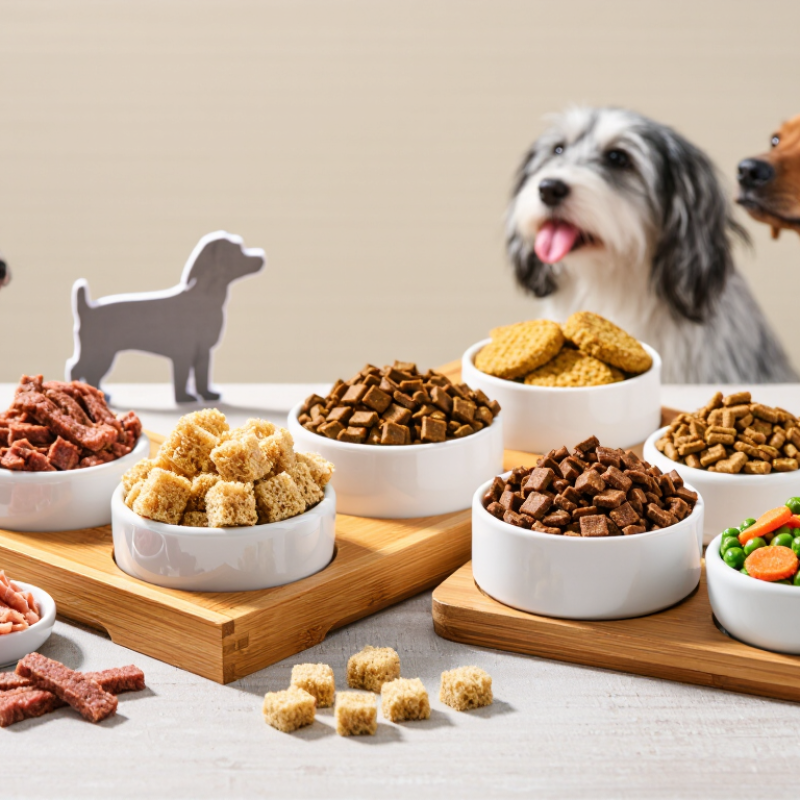
Classify Freeze-Dried Formats: Complete Meals, Mixers, Patties, and Treats
Freeze-dried dog food comes in four useful formats, but they serve different jobs.
Complete meals are intended to provide daily nutrition when the label confirms nutritional adequacy for the dog’s life stage. Check the feeding directions and calorie content; a small-looking portion can be energy-dense.
Patties are compressed portions, often easy to crumble over a bowl or rehydrate with water. They are convenient, but portion sizes still matter.
Mixers are designed to accompany another food, not replace it. Keep add-ons modest, since extra calories can quietly unbalance a carefully measured diet.
Treats are for occasional rewards, not meals.
The World Small Animal Veterinary Association recommends that treats make up no more than 10% of a dog’s daily calories. That limit is easy to overlook when a treat is tiny.
APPA’s 2025 State of the Industry Report estimated U.S. pet-industry spending at $152 billion in 2024; this signals a large market, not proof that any format is nutritionally superior.
Compare calorie counts, ingredient details, and feeding claims. Rehydration may improve texture, though it adds a step—and sometimes a messy bowl.
Match the Formula to AAFCO’s Adult Maintenance or Growth Profile
When comparing freeze-dried dog foods in 2026, start with the nutritional adequacy statement, not the ingredient list. Look for a formula labeled complete and balanced for adult maintenance if your dog is fully grown and not pregnant or nursing. For puppies, choose a statement covering growth. Some labels specify growth of large-size dogs, important for dogs expected to weigh 70 pounds or more as adults. Read the label.
Adult maintenance and growth are different nutrient profiles, not marketing tiers. AAFCO does not approve individual foods; the label should explain whether nutritional adequacy is supported by nutrient-profile formulation or feeding tests. If a package says “all life stages,” check whether its growth statement includes large-size dogs. That detail can be easy to miss.
Freeze-dried texture alone does not show whether a food fits your dog’s life stage. Check feeding directions, calories per serving, and whether water should be added before feeding. Ingredient lists can look impressive, but they cannot replace the adequacy statement. It is tempting to choose the most varied recipe; matching the profile to your dog’s age is the more useful starting point.
Compare Dry-Matter Protein: AAFCO Minimums Are 18% for Adults, 22.5% for Growth
When comparing freeze-dried dog food types in 2026, start with protein on a dry-matter basis. Patties, nuggets, and crumbles may look similar, but their protein figures can mislead. Labels usually report protein “as fed,” while AAFCO minimums use dry matter. That distinction matters.
For adult maintenance, AAFCO’s minimum is 18% crude protein on a dry-matter basis; for growth and reproduction, it is 22.5%. To compare foods, divide the listed protein percentage by 100 minus the moisture percentage, then multiply by 100. For example, a food listing 30% protein and 6% moisture has about 31.9% protein on a dry-matter basis. Check the life-stage wording, too. A high number alone cannot establish digestibility, calorie suitability, or overall nutritional balance.
Choose a complete-and-balanced food suited to your dog’s life stage. A topper is different: it may not be intended as a sole diet, even when its protein looks impressive. Rehydrate as directed and measure portions carefully; freeze-dried pieces can be calorie-dense and easy to overpour. Even careful comparisons leave gaps, so ask your veterinarian about food choices for puppies or dogs with health needs.
Verify Adequacy: AAFCO Nutrient-Profile Compliance or Feeding-Trial Statement
When comparing freeze-dried dog food types, check the nutritional adequacy statement before judging ingredients or texture. It should say the food is complete and balanced for a named life stage, such as adult maintenance or growth. A vague claim like “made with wholesome ingredients” does not establish nutritional adequacy.
Look for wording that says the food meets an AAFCO nutrient profile or was tested through feeding trials. These are different routes to support adequacy, not a ranking of quality. AAFCO does not approve individual foods, so the package wording matters. Feeding trials assess how dogs do while eating the food under defined conditions; they do not guarantee every dog will thrive on it. Nutrient-profile statements indicate that the formulation is intended to meet specified nutrient levels.
Read the statement for the exact product, not just the food line. Some freeze-dried items are treats or toppers and are not designed to provide a dog’s full diet. Small label detail. Check that the life stage fits your dog, and follow the feeding directions, including any instructions to add water. I find labels easy to skim too quickly; the adequacy statement can be less prominent than the ingredient list. If it is missing or unclear, ask the manufacturer for the full nutritional adequacy information and discuss dietary needs with your veterinarian.
AAFCO Dog Food Profile Minimums by Life Stage
AAFCO nutrient-profile minimums are expressed as a percentage of dry matter for food providing 4,000 kcal of metabolizable energy per kilogram of dry matter. Check the product’s nutritional adequacy statement for the intended life stage: adequacy may be substantiated by meeting an AAFCO nutrient profile or through an AAFCO feeding-trial protocol. These two nutrients alone do not establish that a food is complete and balanced.
Check kcal/kg and FDA Pathogen Alerts When Comparing Safety and Calories
For freeze-dried dog food, compare the energy figure before comparing bag sizes. AAFCO labeling guidance calls for calories in kcal/kg and a familiar unit, such as kcal per cup. Use kcal/kg to compare products sold in different package sizes, then follow the feeding directions and your dog’s body condition. A simple check: daily calories divided by kcal/kg gives kilograms of food per day. That comparison is useful, but not perfect. Recipes and feeding needs differ.
Safety deserves equal attention. A 2014 Journal of the American Veterinary Medical Association survey tested 196 commercial pet foods; Salmonella was detected in 7.7%, and Listeria monocytogenes in 16.3%. The samples included raw products, not freeze-dried foods alone, so the figures are context—not a product-specific risk estimate. Freeze-drying removes moisture, but it does not certify that food is pathogen-free. Small detail, big difference.
Before buying, search the FDA’s Safety Alerts and Recalls notices for the product type and check dates, lot details, and the stated pathogen. An alert is not the same as a confirmed finding in every package, so read the notice carefully. Keep the label and lot code. Wash your hands and the scoop after serving, especially when rehydrating food near a kitchen sink. The kcal/kg number can look precise; it still cannot tell you whether a particular lot is safe.
