2026 Best Freeze Dried Peaches for Wholesale Buyers
Freeze-Dried Peaches can look simple on a sample sheet: pale orange slices, a crisp snap, and a clean fruit aroma. Wholesale decisions are less simple. Buyers must compare piece size, moisture consistency, breakage, packaging, lot traceability, and the supplier’s ability to repeat the same quality. A carton that performs well in a kitchen trial may behave differently after shipping or weeks in storage.
Food scientist Dr. V.M. Balasubramaniam is a recognized food-processing expert. I cannot verify a peach-specific quotation from him, so I won’t present invented words as his. A practical editorial principle for this guide is: “Judge the batch, not just the brochure.” It is not a quotation from Dr. Balasubramaniam. It points to a useful habit: request a representative sample, inspect the pieces, and test them in the intended application. Small details matter. A few soft slices can affect texture; excess crumbs can change usable yield.
This guide to the 2026 best Freeze-Dried Peaches for wholesale buyers focuses on the evidence suppliers can provide, not polished claims alone. It considers product consistency, packaging, documentation, and fit for retail, food service, or ingredient use. No checklist catches everything. Buyers should still test each shortlisted product under their own storage and handling conditions.
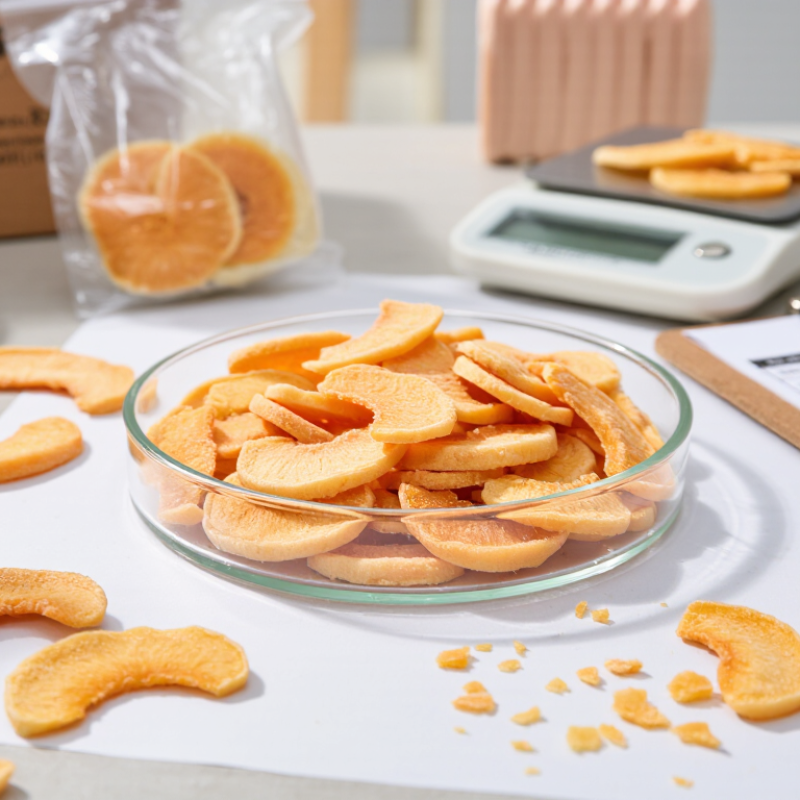
What Freeze-Dried Peaches Are and How They Are Made
Freeze-dried peaches are fresh peaches with most of their water removed while frozen. They retain much of their fruit shape, aroma, and color, but become crisp rather than juicy. A slice snaps lightly. Producers generally select ripe, sound fruit, wash it, remove the pits, and cut it into even pieces. Ripeness matters: underripe peaches may taste flat, while very soft fruit can be difficult to slice consistently. That detail is easy to overlook.
The pieces are frozen and placed in a vacuum chamber. Under low pressure, ice changes directly into vapor through a process called sublimation. Carefully controlled heat helps remove moisture without cooking the fruit like conventional drying can. The finished slices are porous and absorb water quickly, so they need moisture-resistant packaging and dry storage.
Wholesale buyers can ask about slice size, moisture specifications, process controls, and batch testing, since these affect texture and consistency. The label alone does not guarantee identical products. Some variation between harvests is natural.
Key Quality Standards for Evaluating Wholesale Peaches
Wholesale freeze-dried peaches should be assessed by measurable specifications, not appearance alone. Check moisture and water activity, piece size, color, aroma, breakage, and foreign-matter controls. Ask for lot-specific results and a certificate of analysis, then compare samples against the written purchase specification. USDA FoodData Central lists raw peaches at about 88.9 grams of water and 6.6 milligrams of vitamin C per 100 grams. This fresh-fruit reference is useful context, but it is not a finished-product target. Drying methods and crop maturity can change the final profile.
Tips: Request water-activity and moisture results for each lot. Inspect a sealed sample: pieces should feel crisp, not leathery, and smell clean. Check that packaging limits exposure to moisture and oxygen.
Color can flag uneven ripeness or processing, but it cannot prove quality. Look for a consistent pale-to-golden tone, while allowing natural variation between harvests. Ask suppliers how they control drying temperature and screen for broken pieces. If peaches are intended for cereal or bakery use, test them in the actual recipe; crispness may soften quickly after opening. No single metric tells the whole story. A bright sample can still crumble during shipping, so assess transit packaging and handling records too. These checks add time, and specifications may need revision after the first production run.
How to Compare Suppliers, Product Grades, and Certifications
For wholesale buyers, “grade” can mean different things from one supplier to another. Ask for written specifications covering slice size, color range, moisture, and acceptable broken pieces. A bag of pale, intact slices may look premium, but appearance alone cannot predict performance in cereal, snack mixes, or bakery applications. Request samples from more than one production lot. Then compare texture and flavor after opening.
Check how each supplier controls moisture and protects the product during storage. Freeze-dried peaches readily absorb humidity, so packaging should provide a dependable moisture barrier and reseal securely after sampling. Ask for the net weight, carton configuration, shelf-life basis, and storage instructions. For a practical comparison, measure usable whole pieces against crumbs in a fixed sample. It is a simple test, though it may not capture every production variation.
Certifications matter only when their scope fits your needs. Review current certificates, issuing bodies, facility details, and covered product categories instead of relying on a logo or sales sheet. Request a recent certificate of analysis and ask which tests are performed, how often, and by whom. Traceability records should connect the shipment to a lot and production date. Details can still be incomplete; that is worth noting, not smoothing over. Keep the approved sample, agreed specifications, and incoming inspection records together for later comparison.
Packaging, Shelf Life, and Storage Requirements for Bulk Orders
For bulk orders of freeze-dried peaches, packaging must protect the fruit from moisture, oxygen, and rough handling. Look for sealed, food-grade inner liners inside sturdy cartons or pouches sized for your production runs. Smaller packs can reduce repeated exposure after opening, though they may add packing costs. Ask suppliers for packaging specifications and a recent product sample. Keep cartons intact during inspection.
Shelf life depends on the fruit’s moisture level, processing, and package barrier, so avoid relying on a generic number. Request the stated shelf life, lot date, and storage conditions in writing. A clear best-before date helps with stock rotation, but it does not replace checking seals and product quality. The easy mistake is assuming every carton ages alike. It may not.
Store unopened cases in a cool, dry place, away from sunlight, warm equipment, and strong odors. Keep them off floors and allow airflow around pallets. After opening, transfer peaches to a clean, airtight container and use them promptly. Avoid moving cold cartons into humid rooms; condensation can soften the pieces. Exact temperature and humidity limits vary by supplier, so confirm them before placing a large order.
How to Assess Pricing, Applications, and Buyer Value in 2026
For wholesale buyers, the lowest quote for freeze-dried peaches may not deliver the best value. Compare the landed cost per usable kilogram, including freight, packaging, and expected breakage. Ask for the cut size, moisture specification, ingredient statement, and pack weight. These details affect both shelf life and production yield. A bright sample can still contain too many fines for a visible topping. Check carefully.
Applications should guide the purchase. Peach slices may suit snack packs, while smaller pieces can blend into cereal, granola, or baking mixes. For yogurt or drink powders, test how quickly the fruit softens and whether its flavor remains noticeable. Run samples through your actual process, then weigh usable pieces and record waste. A small trial can reveal more than a polished specification sheet.
Buyer value also depends on reliable supply and clear communication. Request a recent lot sample, a realistic lead time, and written quality limits before placing a large order. Compare suppliers using the same questions and pack sizes. Crop conditions and freight can change quotes during the year, so confirm pricing close to purchase. I would not assume one sample represents every shipment; that assumption is easy to make, and hard to fix later.
| Product Format | Indicative Bulk Price (USD/kg) | Typical Buyer Applications | Useful Specification Checks | Common Bulk Pack | Buyer Value Consideration |
|---|---|---|---|---|---|
| Peach slices | $35–$55 | Cereal, granola, snack mixes, bakery toppings, and retail-ready snack packs | Slice thickness and size consistency; color; breakage; moisture and water activity; ingredient declaration | 5–10 kg food-grade, moisture-barrier liner bags in an outer carton | Recognizable appearance can support premium products, but fragile slices may increase handling loss. |
| Peach pieces or dices | $28–$45 | Trail mixes, bars, baked goods, inclusions, and food-service toppings | Piece-size range; fines percentage; moisture and water activity; flavor and color consistency | 5–10 kg lined bags or cartons | Often a practical choice for formulations where uniform small pieces matter more than whole-slice appearance. |
| Peach powder | $24–$38 | Smoothies, drink mixes, seasoning blends, confectionery, and bakery formulations | Particle size; flowability; moisture and water activity; carrier or added-ingredient disclosure | 5–20 kg sealed, moisture-barrier bags | Convenient for even distribution in dry mixes; check whether the powder is pure peach or contains a carrier. |
| Organic peach slices | $45–$70 | Organic snack ranges, premium granola, specialty bakery, and natural-food products | Current organic certificate and scope; traceability; slice quality; moisture and water activity | 5–10 kg lined bags in cartons | May support an organic product claim where certification and the destination market’s rules are satisfied. |
| Peach crumble or irregular pieces | $22–$36 | Fillings, inclusions, toppings, bakery mixes, and applications where appearance is less critical | Particle-size distribution; fines and foreign-material controls; moisture and water activity | 5–10 kg lined bags or cartons | Can reduce ingredient cost when the recipe allows varied shapes and smaller pieces. |
| Pricing and procurement note: Price ranges are indicative 2026 planning estimates for bulk product, not live supplier quotations. They exclude freight, duties, taxes, and any market-specific certification or testing costs. Actual offers depend on origin, harvest, peach variety, grade, order size, packaging, processing method, and delivery terms. Before ordering, request a current quotation, specification sheet, certificate of analysis, allergen and ingredient statement, sample, and confirmation of minimum order quantity. Moisture and water-activity limits should be agreed with the supplier for the intended application and shelf-life requirements. | |||||