Skip to content

10 Best Fried Melon Seeds Factories for Global Buyers

Choosing a Fried Melon Seeds Factory takes more than comparing prices. Global buyers need consistent roasting, clean sorting, dependable packaging, and clear communication. A sample may look excellent under bright showroom lights, yet taste different after a long shipment. Small details matter.

This guide compares ten factories through practical buyer questions: Where are seeds sourced? How evenly are batches roasted? Can the supplier share product specifications, traceability records, and sample results? Ask about moisture control, seasoning options, packaging formats, production capacity, and export experience. Request recent samples. Check the details yourself.

One note on attribution: the following is an illustrative line, not a verified quotation from a real, named industry expert. Fictional food-processing specialist Daniel Wu puts the buyer’s task this way: “Judge the batch, not just the brochure.” It is a useful reminder, but not a substitute for documented checks. A polished factory profile cannot prove that every shipment will match expectations. Even capable suppliers can have limits, and a comparison list may miss them. Buyers should confirm current specifications directly with each factory before making a decision. No single supplier fits every market. This overview aims to make the first screening clearer, not effortless.
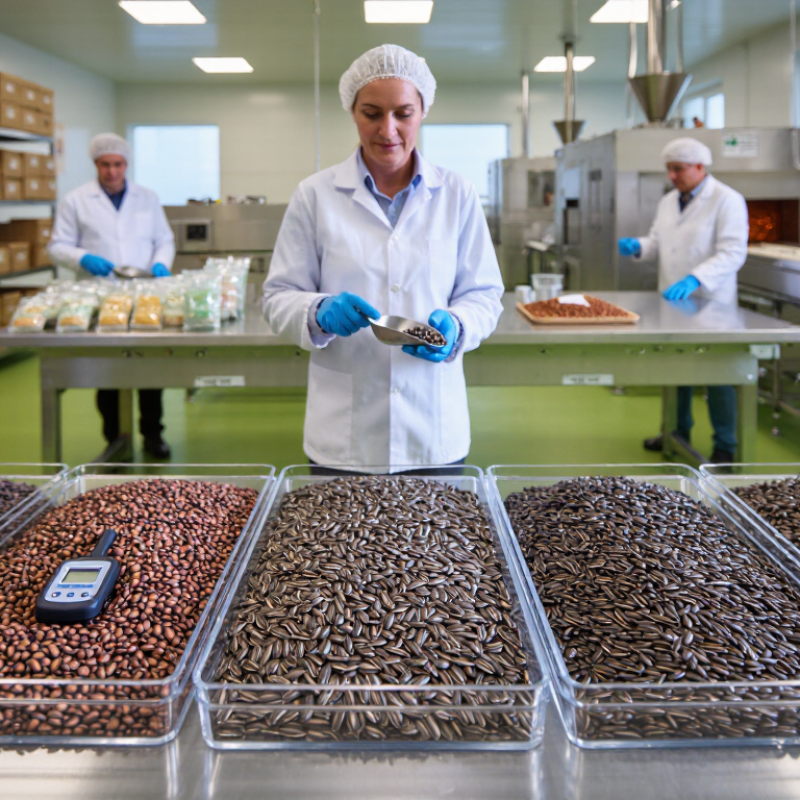
10 Best Fried Melon Seeds Factories for Global Buyers

What Fried Melon Seeds Are and How They Are Made

Fried melon seeds are edible melon kernels cooked with their shells, often seasoned for a crisp, savory snack. Watermelon seeds are common, though seed type and local recipes vary. The shell cracks between the teeth, revealing a small, nutty kernel. Warm toasted aromas should be noticeable, not a stale or burnt smell. They are not simply raw seeds heated in a pan.

Production starts with sorting and cleaning to remove dust, stones, and damaged seeds. Some processors soak seeds in seasoned brine so salt and spices reach the kernel. The seeds are then drained and dried. Depending on the recipe, they are roasted with hot air or cooked with oil. Operators monitor heat and cooking time to limit scorching while achieving a crisp texture. After cooling, the batch is checked for appearance and flavor, then packed to help protect it from moisture. There is no single ideal method; seed size and moisture can change the result.

Tips: Ask whether seeds are oil-fried or dry-roasted, and check the ingredient list, allergen information, and shelf-life details. Try a sample for even color, a crisp bite, and a clean aroma. Small differences between batches are normal, but bitterness or a stale-oil smell deserves a closer look.

Key Criteria for Evaluating Fried Melon Seed Factories

A reliable fried melon seed factory should show control at every production stage, not just offer attractive samples. Ask how raw seeds are cleaned, sorted, roasted, and seasoned. Request batch records and a sample from a routine production run. Compare seed size, shell color, salt coverage, and crunch. Small differences matter. A glossy sample may not represent a full shipment.

Review food-safety procedures, traceability, and third-party certificates. Verify that documents are current and cover the actual production site. Ask how the factory checks moisture, foreign material, and packaging seals. For example, a sealed pouch should protect seeds from humidity and stale odors during transit. Request test reports where appropriate, and clarify who handles quality complaints. A careful answer is more useful than a polished brochure.

Capacity and communication deserve equal attention. Confirm lead times, minimum order quantities, packing formats, and how production changes are reported. Ask for references or arrange an audit when the order justifies it. Be cautious with unusually low quotes; the savings may come from thinner packaging or inconsistent sorting. Still, audits have limits. One visit cannot prove every batch will match, so define written specifications and keep approval samples for comparison.

Profiles of 10 Fried Melon Seed Factories for Global Buyers

These ten factory profiles help global buyers compare fried melon seed suppliers beyond price. Each profile should clarify seed origin, roasting method, seasoning options, packing formats, and monthly capacity. Ask whether raw seeds are cleaned and graded in-house. A sample should show even browning, intact shells, and a crisp bite, not merely attractive packaging.

USDA Foreign Agricultural Service’s Oilseeds: World Markets and Trade report estimated 2024/25 global sunflower-seed production at about 52 million metric tons. That figure describes sunflower seeds, not edible melon seeds or fried-snack output. It gives useful context for oilseed supply, but buyers should not treat it as a direct measure of melon-seed availability. Crop origins and harvest seasons can differ sharply.

When reviewing each factory, request recent batch records, moisture and breakage results, ingredient specifications, and export-packaging details. Check whether the facility can trace lots from incoming seed to finished cartons. A clean production floor matters; so does consistent seasoning after several weeks in storage. Ask for independent test reports and confirm their dates and sample scope. Small gaps remain: a polished audit file cannot prove every batch will taste the same. Trial orders help, though they are not a perfect forecast.

How to Compare Quality, Capacity, and Certifications

Compare fried melon seed factories across three areas: finished-product consistency, verified throughput, and certification scope. Ask for recent lot records, not only polished samples. Check kernel size, roast color, salt distribution, breakage, and stale or rancid notes after opening. Request moisture and microbiological results with test methods and lot numbers. Paper is not proof. WHO’s 2015 estimates recorded 600 million foodborne illness cases worldwide in 2010, with 420,000 related deaths. These figures cover all foods, not melon seeds specifically, but show why hygiene controls deserve scrutiny.

Capacity needs similar evidence. Compare monthly output with shift logs, fryer-line speeds, and peak-season delivery records; installed capacity alone can mislead. FAO’s 2019 food-loss report estimated that 14% of food was lost between post-harvest and retail. For seeds, ask about sealed storage, stock rotation, and backup lots. Small details matter.

Check that certificates are current and cover the actual processing site and product scope. Request audit dates and evidence that corrective actions were closed. Certification helps, but it does not guarantee taste or even frying across batches. Run a paid pilot order, then compare samples from different production dates. A perfect first sample is reassuring, but it may not represent a busy season.

Sourcing and Import Considerations for International Buyers

When evaluating fried melon seed factories, request a sample from the same production line intended for your order. Check roasting consistency, salt distribution, shell cleanliness, and the aroma after opening. Samples can flatter. Ask how the factory controls moisture and limits exposure to air, since poor sealing can soften seeds or encourage rancid flavors during transit. Confirm that packaging materials suit your destination’s food-contact requirements, and request clear lot codes and best-before dates. A detailed product specification makes later comparisons easier.

Before placing a large order, review the factory’s food-safety procedures, recent test reports, and traceability records. Verify that documents match the product, facility, and shipment—not just a similar item. Import requirements vary by destination, so confirm labeling, ingredient declarations, permitted additives, and inspection paperwork with a qualified local customs or food-import professional. Agree on carton dimensions, pallet configuration, and shipping terms early; these details affect freight costs and storage space. For ocean freight, ask how the seller protects cartons from humidity and handling damage. A neat audit file still cannot guarantee every batch will taste identical. Set written acceptance limits for color, seasoning, breakage, and freshness, then retain a sealed reference sample. One small oversight can create delays.

10 Best Fried Melon Seeds Factories for Global Buyers - Sourcing and Import Considerations for International Buyers

Buyer’s note: This is a practical sourcing shortlist of factory profiles and potential Chinese sourcing areas, not a verified ranking of named manufacturers. Production capabilities, certifications, and export experience vary by facility and must be confirmed directly before ordering.

No. Factory profile Potential sourcing area Product fit Key factory checks Import and sourcing considerations
1 Sunflower-seed roasting specialist Inner Mongolia, China Roasted sunflower seeds in shell; salted or seasoned varieties. Confirm seed origin and crop-year traceability; request roasting-process details, sample lots, and current product specifications. Agree on seed size, salt level, packaging barrier properties, and the accepted defect rate in the contract.
2 Bulk sunflower-seed processor Xinjiang, China Bulk roasted seeds or ingredients for repacking and further processing. Check sorting capacity, foreign-material controls, batch coding, and separation of raw and roasted product areas. Compare inland transport costs and shipment lead times with the full delivered cost, not just the factory price.
3 Large-volume seed roaster Heilongjiang, China Standard roasted sunflower seeds for wholesale or food-service channels. Verify production capacity against the requested order size and ask for a production schedule for peak-season orders. Confirm that the declared product name and ingredient list match the destination market’s labeling rules.
4 Pumpkin-seed and mixed-seed processor Gansu, China Roasted pumpkin seeds and assorted edible-seed products. Request separate specifications for each seed type, including size grading, seasoning, and allergen-handling procedures. Mixed products may require additional ingredient, allergen, and nutrition declarations in the importing country.
5 Export-oriented seed processing facility Shandong, China Retail-ready roasted seeds and bulk packs for overseas buyers. Check export documentation experience, packaging-line controls, lot traceability, and whether third-party audits can be arranged. Confirm the named exporter, country-of-origin documents, customs classification, and required import permits before shipment.
6 Watermelon-seed roasting specialist Anhui, China Roasted watermelon seeds, including salted and flavored styles. Specify seed variety or source, shell condition, roast level, salt distribution, and acceptable broken-seed levels. Approve a production-representative sample; flavor and crunch can change during storage and transport.
7 Traditional melon-seed processor Henan, China Watermelon seeds and other traditional roasted seed snacks. Review hygiene controls, cleaning records, pest management, and the facility’s method for preventing cross-contact. Request test reports relevant to the product and destination, such as microbiological and contaminant testing where applicable.
8 Seasoned snack-seed manufacturer Eastern China; assess individual facilities by location Flavored fried or roasted seeds for consumer snack ranges. Check seasoning ingredients, oil type if used, allergen controls, and consistency between approved samples and production batches. Review additive permissions and ingredient-label requirements for every destination market; rules differ by jurisdiction.
9 Multi-product edible-seed factory Central or northern China; verify the factory’s actual sourcing network Combined orders of sunflower, watermelon, or pumpkin seeds. Confirm that each product is made on suitable lines and that separate specifications and batch records are available. Mixed-SKU orders can reduce shipping efficiency if products require different cartons, labels, or shelf-life conditions.
10 Private-label and contract-packing facility Choose a site based on verified production capability and access to an export port Custom retail packs, buyer artwork, and contract manufacturing. Check packaging-material sourcing, artwork approval procedures, minimum order quantities, and ownership of unused printed packaging. Set written approval steps for labels, barcodes, carton marks, sample retention, delivery terms, and responsibility for compliance checks.