China Best Walnut Food Suppliers for Global Buyers
China’s walnut supply chain is large, varied, and not always easy to compare. FAOSTAT’s production database places China among the world’s leading walnut producers, while USDA Foreign Agricultural Service reports track global tree-nut production and trade. These sources give buyers useful context, but they do not certify an individual factory, grade, or shipment. That gap matters. A bright kernel sample may look promising, yet its moisture level, freshness, and traceability still need checking.
For global buyers, choosing a Walnut Food supplier means looking beyond price. Ask about origin, harvest year, sorting standards, processing controls, and export documentation. Request recent test results and a representative sample; then check that the delivered lot matches both. Dr. Penny Kris-Etherton, a nutrition scientist whose research includes walnuts, has examined their role in heart-healthy diets. A careful paraphrase of her research is: “Walnuts offer nutritional value, but quality and food choices matter too.” This is a paraphrase, not a verbatim quotation.
Details show the difference. A clean carton, clear batch code, and consistent kernel color are practical signals—not guarantees. Nor does a supplier’s polished brochure prove that every shipment will perform well. Buyers should compare evidence, ask follow-up questions, and document specifications before placing large orders. Sometimes the first sample is excellent. The next one may not be. That possibility deserves honest attention.
China’s Walnut Industry and Its Main Product Categories
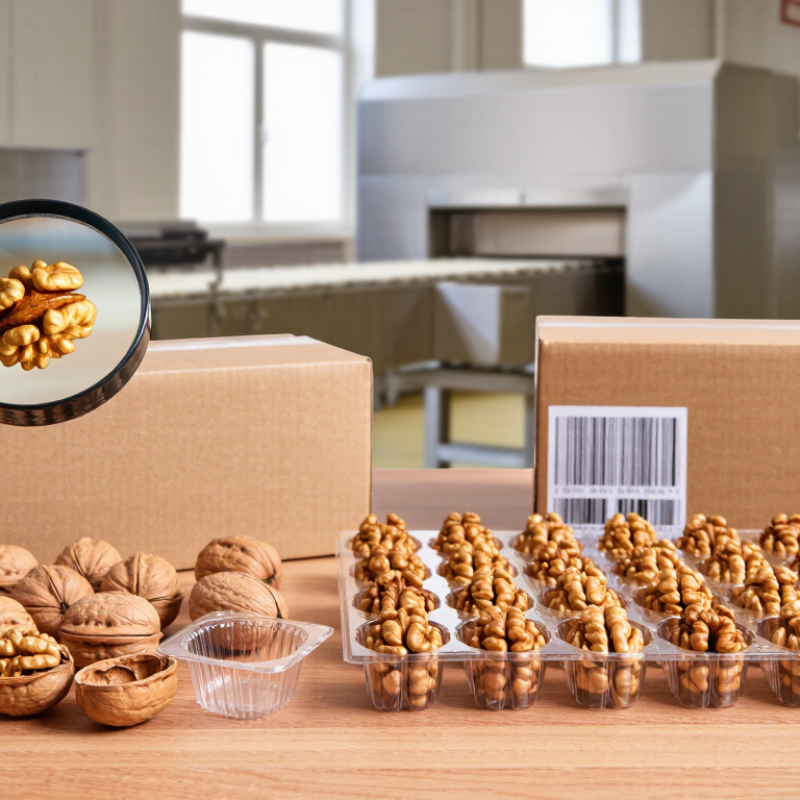
China’s walnut industry supplies several product forms, shaped by growing conditions, harvest timing, and processing choices. Buyers commonly encounter in-shell walnuts, shelled kernels, kernel halves and pieces, walnut oil, and walnut meal. Each suits a different use. In-shell nuts are often selected for retail or cracking, while kernels work well in baking, snacks, and ingredient blends. Halves can create a more consistent appearance in finished foods; smaller pieces may suit fillings and toppings. Walnut oil offers a distinct flavor, but buyers should confirm its intended use and storage requirements.
Product quality can vary between harvests and processing lots. Ask suppliers for the crop year, origin, kernel size, moisture information, packing details, and available traceability records. For kernels, inspect color, breakage, and any signs of rancidity; a sample can reveal more than a broad grade description. Details matter. Specifications may sound clear, yet terms such as “light” or “large” can mean different things between sellers. I would compare written specifications and samples before committing to a shipment. Storage deserves attention too: heat and air exposure can dull flavor, so packaging and transport conditions should match the product. No single category or grade tells the whole story.
Types of Walnut Suppliers Across China
China’s walnut suppliers generally fall into three groups: orchard cooperatives, processors, and export-oriented traders. Cooperatives can offer closer links to growers and harvest details, but lot sizes and grading may vary. Processors crack, sort, and pack kernels, often providing clearer specifications for size, color, moisture, and breakage. Traders can consolidate goods from several regions, which helps buyers seeking larger volumes. It can also make farm-level traceability harder.
FAOSTAT’s 2022 crop data puts China’s in-shell walnut production at roughly 1.4 million tonnes, making the country a major source market. Production is spread across areas including Xinjiang, Yunnan, Shaanxi, and Hebei, so origin can affect harvest timing and kernel characteristics. Buyers should request a current product specification, recent test results, and a sample from the same lot offered for shipment. Details vary.
Ask how the supplier measures moisture and kernel yield, and whether results come from an independent laboratory. For shelled kernels, inspect color and broken pieces under consistent lighting; a sample can look better than a bulk lot. That distinction is easy to miss. USDA Foreign Agricultural Service market reporting can help buyers track broader supply conditions, but it cannot replace supplier-specific checks. Regional reputation is useful context, not proof of consistent quality.
How to Evaluate Chinese Walnut Suppliers
Choosing a Chinese walnut supplier starts with the product, not a polished catalog. Ask for the origin, harvest period, variety, grade, and processing location for each lot. Request written specifications for kernel size, moisture, defects, and packaging. Small details matter: a sample that smells clean and snaps crisply may still differ from bulk stock. Compare it with a sample drawn from an actual production lot.
Then review food-safety records. Ask for recent, lot-linked test results and confirm the tests suit your destination market. Check how the supplier manages sorting, foreign material, allergen handling, and storage humidity. Visit the facility when practical, or arrange an independent inspection. Paperwork can still look perfect. Check the dates. Match lot codes and quantities across the test report, sample, and shipment documents. A certificate alone cannot prove consistent quality.
Assess reliability through a trial order. Check whether cartons resist moisture, labels remain readable, and shipping updates arrive on time. Discuss lead times, complaint handling, and remedies for lots that miss agreed specifications. Samples are limited. Walnut color and texture can vary naturally, so set clear acceptance criteria in writing. Keep some flexibility for normal variation, but do not judge a supplier from one flawless sample alone.
Export Standards and Quality Controls for Global Buyers
For global buyers, walnut quality starts with a clear product specification. It should identify variety, grade, size, harvest year, and acceptable levels of broken kernels or foreign material. Ask for lot-specific test reports, not a general certificate covering several shipments. Moisture checks help reduce the risk of mold during storage and transit. Aflatoxin testing should use a competent laboratory and methods accepted in the destination market. Limits and required documents vary by country, so confirm them before production. Small details matter.
Export controls should follow the walnuts from processing to loading. Buyers can request cleaning and sorting records, packaging specifications, and batch codes linked to harvest and processing dates. Inspect sample bags for intact seals, readable labels, and liners that protect against moisture. For container loading, review cleanliness, odors, and signs of condensation; a dry container can still develop moisture problems on a long route. Confirm certificates, origin details, and any applicable plant-health documents against current import rules. Keep samples from each lot where practical. Paperwork can look perfect while a few bags tell a different story, so inspections and records should support each other. No system is flawless. Regular review helps reveal weak points before the next shipment.
Sourcing, Shipping, and Importing Walnuts from China
Sourcing walnuts from China begins with a clear product specification. Define the variety, kernel or in-shell format, size range, color, moisture limit, and acceptable defect levels. Ask suppliers for recent harvest details, lot identification, and food-safety documentation. Request samples from the actual production lot, not only a presentation sample. A polished sample can hide variation. That is easy to overlook.
Before confirming an order, agree on inspection points and how nonconforming goods will be handled. Compare the sample’s crunch, aroma, and appearance after opening the package. Check that cartons or food-grade bags protect the nuts from light, pests, and moisture. For ocean shipping, discuss container cleanliness, dry loading conditions, liners, and desiccants with the logistics provider. Keep product and lot records together. Small details matter.
Import requirements depend on the destination country and product form. Confirm current rules with the relevant food and plant-health authorities or a qualified customs broker before shipment. Documents may include a commercial invoice, packing list, certificate of origin, and health or phytosanitary certificates when required. Do not assume one shipment’s paperwork will suit another market. Allow time for inspection and clearance, and build a buffer into delivery plans. Even careful sourcing cannot prevent every delay.
