Skip to content

China Top 10 Polyaluminum Chloride Manufacturers 2026

China’s polyaluminum chloride industry is entering 2026 with stronger demand from municipal water treatment, industrial wastewater, and process industries. The market is becoming more technical, not merely larger.

Grand View Research’s water and wastewater treatment chemicals studies identify coagulation as a critical treatment stage. Their analysis also highlights Asia-Pacific’s strong growth, supported by urbanization, infrastructure investment, and stricter discharge expectations. MarketsandMarkets reports similar momentum for water treatment chemicals, although its market boundaries differ. These differences matter.

Polyaluminum chloride is widely used because it can reduce turbidity, suspended solids, and organic impurities efficiently. In a typical treatment plant, operators may adjust dosage after testing raw-water color, temperature, alkalinity, and turbidity. Small changes can affect sludge volume and final water clarity.

This 2026 overview examines ten notable Chinese manufacturers. It considers production capacity, product grades, export experience, quality systems, technical support, and application performance. Evidence may include company records, certification information, product specifications, and independent industry sources.

No ranking is perfect.

Manufacturers often publish different capacity figures. Some figures describe designed capacity, while others reflect actual output. That distinction deserves attention. Buyer requirements also vary between drinking-water plants, paper mills, mining operations, and municipal facilities.

The selected companies therefore should not be judged by scale alone. Reliable supply, batch consistency, laboratory support, transparent documentation, and responsible environmental practices are equally important. Readers should verify current certificates, test reports, and plant capabilities before making procurement decisions. This approach creates a more practical and credible view of China’s leading polyaluminum chloride manufacturers in 2026.
China Top 10 Polyaluminum Chloride Manufacturers 2026

What Is Polyaluminum Chloride and How Is It Used?

Polyaluminum chloride, or PAC, is an inorganic coagulant used in drinking-water, wastewater, and industrial treatment. It contains polymerized aluminum species that neutralize particle charges. These particles then join into visible flocs. The flocs settle or float more easily.

The chemistry is practical, not magic. PAC usually performs best within a controlled pH range, often near neutral conditions. Operators adjust dosage through jar testing, turbidity checks, and residual aluminum monitoring. A 2022 World Health Organization report notes that 2.2 billion people lacked safely managed drinking water services in 2022. This pressure increases demand for reliable treatment chemicals. Yet PAC cannot replace filtration, disinfection, or competent plant operation.

PAC is used in municipal clarification, sludge conditioning, paper production, textile wastewater, and some mining effluents. Its lower dosage requirement can reduce sludge volume, but performance depends on alkalinity, temperature, organic matter, and mixing energy. The 2024 UN World Water Development Report identifies agriculture as responsible for roughly 70% of global freshwater withdrawals. Industrial water reuse therefore matters more each year. In practice, one formula rarely fits every facility. Overdosing may increase sludge and leave aluminum residuals. Underdosing produces cloudy water. Operators should verify supplier specifications against independent laboratory results and local water-quality requirements. Even experienced teams sometimes treat jar-test results as permanent answers. They are not.

How China’s PAC Manufacturers Are Evaluated in 2026

In 2026, evaluating China’s top PAC manufacturers requires more than comparing quoted prices. A credible top-ten list should examine raw material control, reaction stability, and documented production records. Buyers should check aluminum oxide content, basicity, insoluble matter, pH, and moisture. These figures affect sludge volume, settling speed, and final water clarity. Small details matter. Reliable producers provide batch certificates, sampling methods, and traceable lot numbers.

Factory experience is visible in process discipline. During an audit, reviewers can inspect dosing systems, filter presses, drying equipment, and sealed packaging areas. They should request recent results from independent laboratories, not only internal test sheets. Technical teams must explain dosage trials for drinking water, municipal wastewater, and industrial effluent. Field support also counts. Can an engineer interpret jar-test results within hours? Can the supplier adjust advice when temperature or turbidity changes? Practical responses reveal expertise better than polished brochures.

Commercial reliability includes delivery capacity, export documents, safety data, and complaint handling. A manufacturer may offer an attractive price yet lack stable production during peak seasons. That weakness can interrupt treatment operations. Public information is sometimes incomplete, and online rankings may reward visibility rather than performance. Buyers should compare verified records across several batches and sites. Even a strong supplier deserves ongoing review. PAC performance can shift when raw water changes, so evaluation should remain evidence-based, transparent, and open to correction.

China Top 10 Polyaluminum Chloride Manufacturers 2026

How China’s PAC Manufacturers Are Evaluated in 2026

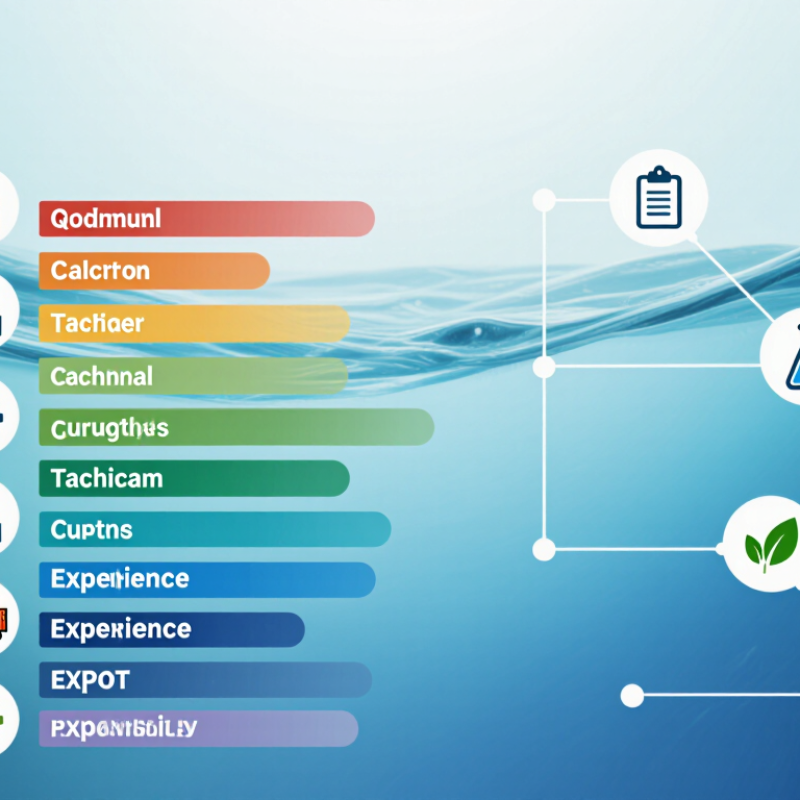
This illustrative evaluation framework uses weighted procurement criteria commonly applied to water-treatment chemical suppliers. Product quality consistency and regulatory compliance receive the highest weighting, followed by treatment performance, production capacity, delivery reliability, and technical service. The chart presents evaluation dimensions rather than company-specific rankings or brand data.

China’s Top 10 Polyaluminum Chloride Manufacturers in 2026

China’s top 10 polyaluminum chloride manufacturers in 2026 are being assessed through capacity, product consistency, export reach, and water-treatment performance. Industry forecasts from Grand View Research and Fortune Business Insights indicate roughly 6%–7% annual growth for the global polyaluminum chloride market. China remains a major production and exporting base, supported by municipal wastewater projects and industrial water reuse.

Capacity alone does not prove leadership. Strong manufacturers usually operate spray-drying or drum-drying lines, automated dosing systems, and laboratory testing for Al2O3 content, basicity, insoluble matter, and iron levels. Typical liquid grades contain about 10%–18% Al2O3, while high-grade powder products often reach 28%–31%. These specifications affect floc formation, sludge volume, and transport costs. Small differences matter.

Certification and traceability deserve equal attention. The top 10 should provide batch records, safety data sheets, and independent testing evidence. Reports from the China National Chemical Information Centre also highlight tighter environmental controls around chemical production and wastewater discharge. However, public rankings remain imperfect. Some manufacturers disclose capacity, but not actual utilization or overseas sales. Buyers should verify recent test reports, delivery records, and pilot-treatment results before accepting any 2026 ranking.

China Top 10 Polyaluminum Chloride Manufacturers 2026

China’s Top 10 Polyaluminum Chloride Manufacturers in 2026 — Anonymized Product and Capability Comparison
Profile Primary Product Form Al2O3 Content Basicity Range Water-Insoluble Matter Typical pH
(1% Solution)
Common Applications Typical Packaging Applicable Specification
Profile 01 White powder ≥ 30% 45–85% ≤ 0.1% 3.5–5.0 Drinking-water treatment, municipal water purification, and high-clarity applications 25 kg woven bags with inner PE liner GB 15892-2020, where applicable
Profile 02 Light-yellow powder ≥ 29% 45–85% ≤ 0.1% 3.5–5.0 Municipal wastewater, industrial wastewater, and suspended-solids removal 25 kg or 500 kg bulk bags GB 15892-2020, where applicable
Profile 03 Yellow powder ≥ 28% 30–95% ≤ 1.0% 3.5–5.0 Industrial wastewater, mining effluent, paper manufacturing, and sludge conditioning 25 kg woven bags or jumbo bags GB/T 22627-2022, where applicable
Profile 04 Liquid solution 10–12% 40–90% ≤ 0.5% 3.0–5.0 Continuous dosing systems, drinking-water plants, and large municipal facilities IBC tanks, tank trucks, or HDPE drums Liquid-grade customer specification
Profile 05 White or off-white powder ≥ 30% 50–85% ≤ 0.1% 3.5–5.0 Low-turbidity drinking water, surface-water treatment, and odor-sensitive facilities 20 kg or 25 kg moisture-resistant bags GB 15892-2020, where applicable
Profile 06 High-basicity powder ≥ 28% 70–95% ≤ 1.0% 3.5–5.0 Difficult industrial effluent, oily wastewater, and high-load coagulation processes 25 kg bags or 1,000 kg bulk bags GB/T 22627-2022, where applicable
Profile 07 Spray-dried powder ≥ 29% 45–85% ≤ 0.1% 3.5–5.0 Automated dosing, rapid dissolution systems, and drinking-water clarification 25 kg laminated bags GB 15892-2020, where applicable
Profile 08 Industrial-grade powder ≥ 26% 30–95% ≤ 1.5% 3.5–5.0 Construction wastewater, aggregate washing, textile effluent, and general industrial use 25 kg woven bags or bulk bags Industrial customer specification
Profile 09 Liquid solution 8–10% 40–90% ≤ 0.5% 3.0–5.0 On-site water treatment, wastewater polishing, and systems requiring reduced dust exposure HDPE drums, IBC tanks, or bulk delivery Liquid-grade customer specification
Profile 10 Customized powder 26–30% 40–90% ≤ 1.0% 3.5–5.0 OEM formulations, export orders, paper mills, dyeing plants, and process-specific treatment 20 kg, 25 kg, or jumbo bags Contract-specific technical specification
Note: Company identities and brand information are intentionally omitted. The specifications shown are representative commercial ranges commonly used for polyaluminum chloride in China; exact values should be confirmed through the supplier’s current technical data sheet, certificate of analysis, and applicable product standard.

Comparing PAC Products, Production Capacity, and Quality Standards

China’s leading polyaluminum chloride manufacturers differ in product design, capacity, and testing discipline. Buyers should compare powder and liquid PAC separately.

Powder often offers easier storage and longer transport flexibility. Liquid PAC can reduce preparation work but requires suitable tanks and temperature control.

Key product indicators include:

Al2O3 content basicity insoluble matter pH color

Higher concentration is not automatically better. Treatment results depend on raw water chemistry and dosage control.

Tips:

Request recent batch reports, not only brochures. Check whether results come from internal laboratories or independent testing bodies. Compare samples under identical jar-test conditions. Ask for annual capacity, practical output, and available reserve stock. These figures are different.

Production capacity matters when projects need stable monthly supply. A large facility may provide stronger continuity, but capacity alone cannot prove quality.

Review drying equipment, batch traceability, packaging integrity, and complaint response procedures.

For drinking-water applications, confirm compliance with applicable standards, such as GB 15892, while other uses may follow different requirements, including GB/T 22627. Inspect certificates carefully because standard editions can change. I would also verify heavy metals and residual impurities through current laboratory reports. Some comparisons remain imperfect when manufacturers report capacity differently. That limitation deserves attention. A practical evaluation should combine factory evidence, trial results, delivery records, and technical support.

How to Choose a Reliable Chinese PAC Supplier

Choosing a reliable Chinese polyaluminum chloride supplier requires more than comparing catalog prices. Check the factory’s production capacity, raw material sources, quality controls, and export experience. A professional supplier should provide recent test reports, safety documents, product specifications, and batch records without hesitation.

Ask for key data, including Al2O3 content, basicity, insoluble matter, pH value, and moisture. The figures should match your treatment process. Request samples from different production batches, not only one carefully selected bag. Test them in your own water, using the same dosage, mixing speed, and settling time. Small differences can affect sludge volume and final water clarity.

Visit the production site when possible. Look for clean storage areas, labeled raw materials, calibrated testing equipment, and traceable packaging. A dependable manufacturer can explain how it handles complaints and delayed shipments. It should also confirm packaging weight, container loading, lead time, and document accuracy before payment.

Do not trust impressive claims alone. One audit is not enough. I have seen technically strong suppliers communicate poorly after receiving an order. A cheaper quotation may reduce short-term costs, yet inconsistent batches can create higher operating expenses. Start with a controlled trial order and record every result. Reliable cooperation is built through evidence, communication, and repeated performance.