Skip to content

How to Choose the Best Infant Diapers for Wholesale?

Choosing the best Infant Diapers for wholesale requires more than comparing carton prices. A low unit cost can hide weak absorbency, inconsistent sizing, or excessive packaging waste. Wholesale buyers should examine the complete product, from the soft inner liner to the fastening tabs and elastic leg guards.

Pediatrician and infant-care expert Dr. Tanya Altmann states, “A comfortable, dry baby is more likely to sleep, feed, and develop well.” This practical point matters for every purchasing decision. A diaper may look attractive in a sample photo, yet feel stiff against a baby’s skin. Test several sizes with real usage conditions. Check overnight leakage, waistband pressure, odor control, and wetness distribution. Small details often influence repeat orders.

Reliable suppliers should provide material specifications, factory quality records, product samples, and clear shipping timelines. Ask about absorbent core composition, fragrance use, latex content, and skin-sensitivity testing. Confirm that packaging matches the needs of your market. Retailers may prefer compact bundles, while hospitals often need simple, easy-to-open packs.

There is no universal winner. Babies have different body shapes, movement patterns, and skin responses. A diaper that performs well in a dry climate may disappoint in humid storage conditions. That possibility deserves attention. Wholesale buyers should compare landed cost, not only the factory quotation. Include freight, inspection, damaged units, and replacement policies. A careful trial order may seem slower, but it can prevent thousands of unsuitable products from reaching shelves. Quality evidence should guide the decision, even when the cheapest offer feels tempting.
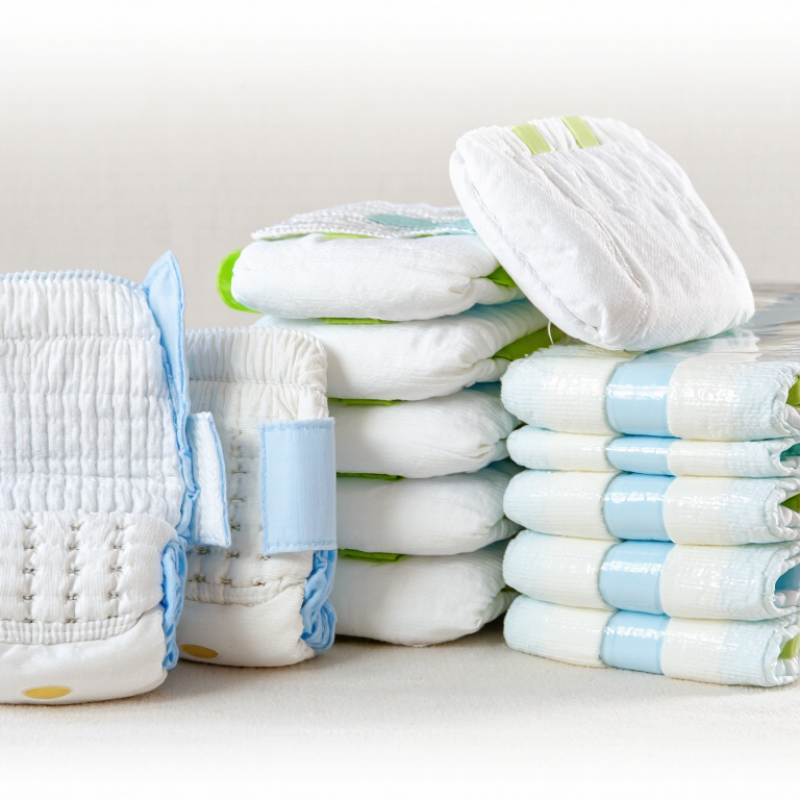
How to Choose the Best Infant Diapers for Wholesale?

Set Wholesale Needs with the AAP Benchmark of 6+ Wet Diapers Daily

Choosing the best infant diapers for wholesale begins with a practical usage benchmark. The American Academy of Pediatrics states that babies usually produce six or more wet diapers daily after the first several days. This figure helps wholesalers estimate demand more accurately than guesswork.

Use six diapers as a planning floor. A retailer serving 100 infants may need at least 18,000 diapers monthly, before adding overnight needs, size changes, or damaged units. A 5–10% buffer can protect stock availability. However, newborns often change sizes quickly. Ordering only one size may create slow-moving inventory.

Fit matters as much as volume. Look for soft elastic, secure fastening, and absorbent channels that reduce leakage during naps. Packaging should show size, count, materials, and clear usage guidance. The National Diaper Bank Network’s 2023 Diaper Check report found that diaper need affects nearly half of surveyed families with young children, showing why reliable supply matters to household budgets.

The six-diaper benchmark is useful, but imperfect. Some babies wet more, and feeding patterns change demand. Wholesale buyers should compare local sales data with the AAP reference, then review orders every four weeks. Small test shipments may reveal better sizing patterns than a large first purchase. Practical evidence wins.

How to Choose the Best Infant Diapers for Wholesale? — Set Wholesale Needs with the AAP Benchmark of 6+ Wet Diapers Daily
Infant Age / Stage AAP Wet-Diaper Benchmark Minimum Wet Diapers per 7 Days 30-Day Minimum Benchmark Recommended Wholesale Reserve Minimum Stock Including 10% Reserve Wholesale Planning Guidance
Day 1 At least 1 wet diaper 7 30 10% 33 Use newborn-sized inventory in small quantities because the first-day requirement is low and sizing can change quickly.
Day 2 At least 2 wet diapers 14 60 10% 66 Prioritize soft materials, a secure waistband, and clear wetness indication for frequent checking.
Day 3 At least 3 wet diapers 21 90 10% 99 Stock enough newborn and small-size options to accommodate differences in infant weight and fit.
Day 4 At least 4 wet diapers 28 120 10% 132 Check absorbent-core performance and leakage protection because urine output is increasing.
Day 5 At least 5 wet diapers 35 150 10% 165 Choose diapers with adequate capacity, flexible leg cuffs, and a comfortable fit for regular changes.
Day 6 and Beyond 6 or more wet diapers daily 42 or more 180 or more 10% 198 or more Use this benchmark for steady-state inventory planning, while remembering that total diaper changes can exceed the number of wet diapers.
Wholesale Replenishment Rule Use the 6+ daily benchmark after the first several days Daily benchmark × 7 Daily benchmark × 30 Add 10% for demand variation Monthly minimum × 1.10 Reorder before available inventory falls below approximately 14 days of projected demand to reduce stockout risk.
Important planning note: The AAP wet-diaper number is a hydration and feeding-output benchmark, not a complete estimate of total diaper consumption. Wholesale orders should also account for bowel movements, diaper changes after soiling, overnight use, product fit, infant growth, and local demand.
Reference: American Academy of Pediatrics guidance commonly indicates that, by about day 4–5 after birth, an infant should generally have at least six wet diapers per day. Individual medical concerns should be discussed with a qualified healthcare professional.

Compare Absorbency Using ISO 11948-1 Test Results and Retention Data

For wholesale buyers, absorbency should be compared with consistent evidence, not packaging claims. ISO 11948-1 measures the total liquid absorption capacity of disposable absorbent products under controlled laboratory conditions. Request the full test report, including product size, sample conditioning, liquid type, temperature, and testing date. Without these details, two impressive numbers may not be truly comparable.

Retention data adds another practical layer. It indicates how much liquid the diaper keeps after pressure or movement, depending on the applied test method. Review the retained amount alongside total absorption. A diaper may absorb a large volume but release too much when compressed. That matters during crawling, sitting, and overnight use. Look for repeated results across several samples, not one unusually strong result. Small differences can affect thousands of units in a wholesale order.

Use a simple comparison sheet. Record ISO 11948-1 capacity, retention percentage, rewet results, leakage observations, and size consistency. Check samples on different body shapes and after realistic movement. Laboratory data is valuable, but it cannot fully predict fit or comfort. A high number can still disappoint. One weakness remains: retention methods may differ between suppliers. Ask clear questions, keep test conditions visible, and inspect production samples before approving large quantities. Be willing to revise your ranking when real-use evidence conflicts with the laboratory result.

How to Choose the Best Infant Diapers for Wholesale?

ISO 11948-1 absorbency and liquid-retention comparison

The chart compares anonymized diaper samples using mean total liquid absorption measured according to ISO 11948-1 and a separate retention test after controlled pressure. Higher absorption and retention values generally indicate greater fluid-handling capacity. Results are laboratory-style mean values from 10 specimens per sample; confirm supplier performance with independent testing before wholesale purchasing.

Match Sizes to Infant Weight Ranges Under ISO 15621 Guidance

For wholesale buyers, infant weight is a safer starting point than age or diaper appearance.

The WHO Child Growth Standards report lists median newborn weights near 3.2–3.3 kg. At 12 months, medians rise to about 8.9–9.6 kg, with wide normal variation. These figures help forecast size demand, but they do not define diaper size limits. A neat chart can still mislead.

ISO 15621 guidance supports consistent evaluation of disposable absorbent products, including fit, leakage, comfort, and user conditions. It does not publish a universal infant diaper size table. Therefore, map each supplier’s stated weight range against WHO percentiles and local birth data.

A 3–5 kg opening size may need deeper stock in neonatal channels. A 9–14 kg range may move faster in toddler-focused wholesale accounts. Check overlap between sizes.

Use sample cartons for a practical fit audit:

record waist gaps, thigh marks, tab position, and overnight leakage. Weigh dry and used diapers during controlled tests, then compare retention and rewet results. EDANA’s absorbent hygiene testing resources stress standardized methods, yet warehouse reality remains uneven.

Heat, storage time, and caregiver folding can change performance. Do not trust weight alone.

A 6 kg infant may need a different cut because of thigh shape or mobility. Wholesale forecasts should combine WHO data, supplier test results, return rates, and retailer feedback. Our first forecast may be wrong; that is useful evidence, not failure.

Verify Safety Through GB/T 28004.1, REACH, CPSIA, and OEKO-TEX

How to Choose the Best Infant Diapers for Wholesale?

Safety should guide every wholesale diaper decision.

Start by checking compliance with the current GB/T 28004.1 requirements for infant diapers sold in China.

Review absorbency, leakage control, material safety, labeling, and test methods.

Ask suppliers for complete laboratory reports, not only a compliance statement. The report should identify the tested product, batch, date, and laboratory.

For international markets, REACH checks chemical restrictions and substances of very high concern.

CPSIA may require controls for lead, phthalates, testing, and traceability in the United States.

Requirements can vary by product details and market.

OEKO-TEX certification can provide extra evidence about harmful substances in tested textile components. It is useful, but it does not replace legal compliance.

A certificate alone is not enough.

I have seen polished documents with unclear product references. That is a warning sign.

Tips:

Request samples from the same production line. Compare the outer cover, absorbent core, fastening tabs, and elastic areas.

Check whether the report matches the exact size and materials you will purchase. Keep sealed samples for later comparison.

Also inspect packaging labels and production codes. A small mismatch can matter.

Do not rely on one test forever; materials and suppliers may change.

Your checklist may still miss something. Review it with an independent testing professional before placing a large order.

Calculate Wholesale Value from MOQ, Defect Rates, and Unit Cost

How to Choose the Best Infant Diapers for Wholesale?

A wholesale diaper decision should begin with usable cost, not the quoted unit price. Confirm whether the price covers one diaper, one pack, or one carton. Then record the MOQ, expected defect rate, freight, inspection, and packaging costs. These details often change the real wholesale value.

Use this practical formula: effective cost per usable diaper equals total purchase cost divided by accepted units. For example, 20,000 diapers at $0.12 each require $2,400 before shipping. With a 2.5% defect rate, only 19,500 diapers may be sellable. The effective unit cost becomes about $0.123, excluding freight and handling. Small errors matter. A lower quote may still produce a higher cost after defects.

Ask suppliers for recent inspection records and clear quality criteria. Check absorbency, waistband stretch, leak protection, softness, sizing, and sealed packaging.

Samples should be tested after storage and transport, not only when newly opened. MOQ also affects cash flow and warehouse space.

Buying 50,000 units may reduce unit cost, but slow sales can create aging inventory. My experience is that defect estimates are often too optimistic. Recheck them with a pre-shipment inspection and compare accepted quantities against invoices.

A simple spreadsheet can show the break-even selling price, expected margin, and financial risk before placing the order.