How to Choose the Best Resin Toilet Brush Holder?
Choosing a Resin Toilet Brush Holder involves more than matching its color to the bathroom. The holder sits near water, cleaning products, and daily foot traffic, so its shape and surface matter. A smooth resin finish can be easy to wipe, while a wide base may feel steadier on tile. Small details count.
Start by checking the holder’s dimensions against the brush head and handle. A narrow opening can make the brush awkward to return, especially when hands are wet. Look for enough room around the brush, plus a removable inner cup or another practical way to clean the container. Drainage and airflow can help reduce trapped moisture, though designs differ. Not every model offers both.
Material quality deserves a closer look. Resin products vary in thickness, finish, and construction; the word “resin” alone does not guarantee durability. Check product specifications, care instructions, and clear photos of the base and interior. If reviews mention cracking, wobbling, or difficult cleaning, treat those as useful clues—not proof that every unit will behave the same way. There is no perfect holder. A glossy finish may show water marks, while a heavier design can take up more floor space. That trade-off is easy to overlook.
This guide explores how to compare stability, hygiene, size, appearance, and value before buying. It also considers which features matter in a compact guest bathroom versus a busy family bathroom. A few minutes of careful checking can prevent a holder that looks right but feels inconvenient in daily use.
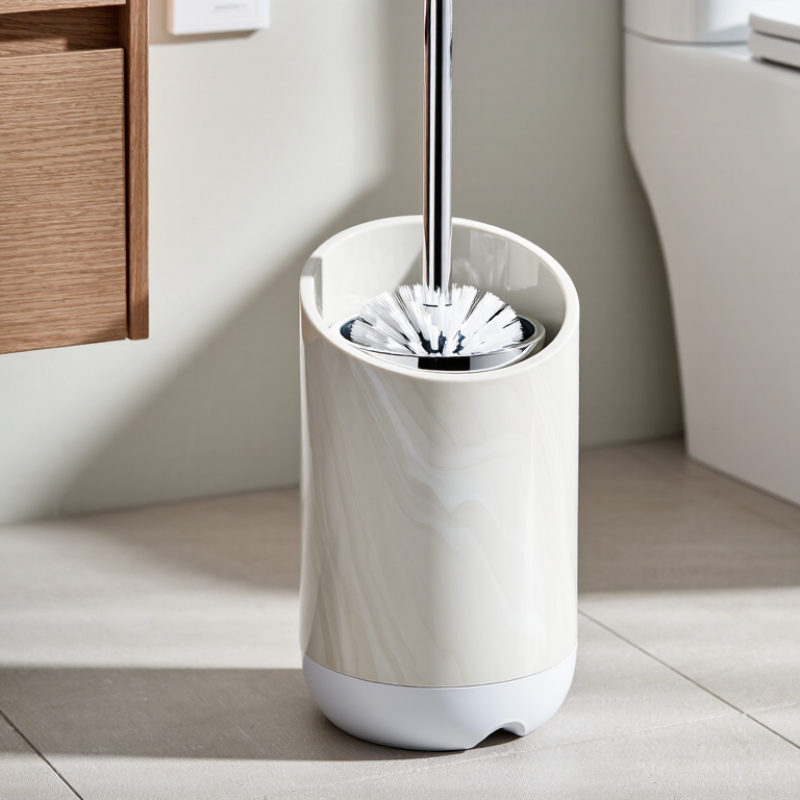
Understanding Resin Toilet Brush Holders and Their Main Types
Resin toilet brush holders are made from molded synthetic material, often chosen for its light weight, varied finishes, and resistance to everyday splashes. They can resemble stone, ceramic, or wood, but the surface and weight differ. A holder with a smooth interior is generally easier to rinse than one with narrow grooves. Still, resin is not magic: standing water and residue can collect around the base if the holder is not cleaned regularly.
The main types are freestanding, wall-mounted, and covered holders. Freestanding models sit beside the toilet and are easy to move for floor cleaning. Check that the base feels stable; a very light holder may shift when the brush is returned. Wall-mounted designs keep the floor clear, though installation and wall space matter. Covered models conceal the brush head, while open designs allow more airflow. Some holders include a removable inner cup, which makes rinsing simpler. A small detail, but useful. There is no single best type for every bathroom. Measure the available space, consider how often you clean the holder, and inspect how the brush drains before choosing. A glossy finish may look neat in a showroom, yet water spots can show more clearly at home.
Comparing Materials, Shapes, Sizes, and Drainage Designs
Resin works well for a toilet brush holder because it resists everyday splashes and is lighter than ceramic. Its quality still varies: thin walls may flex, while a rough interior can trap grime. Compare materials by handling the holder, checking its base, and looking for a smooth, easy-to-wipe finish. A glossy surface may show water marks more clearly than a textured one. Looks can mislead.
Shape affects both stability and cleaning. A wide, weighted base is less likely to tip when the brush is returned quickly. Narrow, tall holders save floor space, but they can be awkward if the brush handle barely clears the rim. Measure the brush head and handle before choosing; a tight fit can leave damp bristles pressed against the sides. That detail is easy to overlook.
Size should suit the bathroom, not just the product photo. Leave enough room to lift the brush without bumping nearby fixtures. Drainage matters, too: a removable inner cup or small drain channel can keep standing water away from the brush head. Check that parts come apart easily for rinsing, and that drainage does not let dirty water leak onto the floor. A design may look clever but clean poorly.
Evaluating Hygiene, Stability, and Ease of Cleaning
How to Choose the Best Resin Toilet Brush Holder?
A resin toilet brush holder should keep the brush upright and limit drips around the bathroom floor. Check the base before buying: a broad, weighted bottom is less likely to tip when you return the brush quickly. Stability matters, especially on smooth tile. Look inside the holder, too. A removable liner or open, easy-to-reach interior makes rinsing away residue less awkward. Resin is generally simple to wipe, but narrow corners can still collect grime. That detail is easy to miss.
Tips: Choose a holder with a smooth interior and enough space around the brush head. After use, let the brush drip over the bowl before storing it. Wipe the holder regularly, and dry the outside if water pools underneath.
Also consider how the holder handles moisture. Small drainage openings can help, but they should not leak onto the floor or leave a wet ring. If the design traps water, cleaning may become a chore. Check that the brush handle fits without scraping the rim, and that you can lift it out with one hand. A compact shape saves space, though very tight designs may be harder to clean. There is a trade-off. A simple holder may look less decorative, but it often has fewer seams where residue can collect.
How to Choose the Best Resin Toilet Brush Holder?
Compare common design features for hygiene, stability, and ease of cleaning. Higher scores indicate a more favorable design for that criterion.
Scores are illustrative design-based ratings, not laboratory test results. Smooth surfaces are generally easier to wipe; a weighted base can improve stability; and a removable liner can simplify cleaning.
Matching the Holder to Your Bathroom Layout and Style
A resin toilet brush holder should fit the room before it makes a style statement. In a narrow bathroom, measure the gap beside the toilet and choose a compact, freestanding shape that can be lifted for cleaning. In a larger room, a taller holder can balance a wide vanity or bold floor pattern. Keep it clear of the door swing and leave enough room to remove the brush without knocking nearby items. Small details matter.
Match the finish to surfaces already in the room: matte resin suits stone-look tile, while a glossy finish can echo ceramic fixtures. Color can help the holder blend in, or make it a deliberate accent.
Houzz’s 2024 U.S. Bathroom Trends Study reported a median spend of $15,000 on primary bathroom renovations. That investment makes small accessories worth choosing thoughtfully, though an expensive look is not always a better fit. Check the holder’s base for stability and its interior for easy cleaning; resin finishes and construction vary.
Tips: Measure the available floor space first. Check that the brush lifts out smoothly, and keep the holder far enough from towels to avoid splashes. If unsure, place a paper outline on the floor for a day. It may reveal a tight corner you overlooked.
Checking Durability, Maintenance Needs, and Price
When choosing a resin toilet brush holder, inspect more than its color. Check that the walls feel sturdy and the base sits flat on tile. A thick, even body is less likely to tip during daily use, though resin quality varies. Small details matter. Look for smooth seams and a wide opening that lets the brush slide in without scraping. In a damp bathroom, a removable drip tray can make cleaning easier. A glossy finish may look polished, but fingerprints and water spots can show quickly. That trade-off is easy to overlook in a product photo.
Maintenance needs affect long-term value. Choose a holder with parts you can separate and rinse; trapped water can leave residue or odor. Wipe the exterior with mild soap and a soft cloth, and check the care instructions before using strong cleaners. Price should reflect practical features, not just decorative details. Compare the resin thickness, tray design, stability, and ease of cleaning across options in the same price range. Not always. The cheapest model may work well, but a flimsy base can become frustrating on slick flooring. I would not pay extra for appearance alone, though that preference may change if the holder sits in plain view.
