How to Choose the Right Hockey Jersey?
Choosing a Hockey Jersey is not just a question of picking a team and color. Fit, fabric, construction, and intended use all affect comfort and value. A jersey worn over shoulder pads needs more room than one worn casually over a T-shirt. Small details matter.
The market offers many choices, from lightweight fan replicas to heavier, on-ice styles. Grand View Research’s Sports Apparel Market Size, Share & Trends Analysis Report estimated the global sports apparel market at USD 212.5 billion in 2023, with projected growth through 2030. That broad category includes far more than hockey jerseys, so the figure is context, not a measure of jersey sales. Still, it points to a crowded apparel market where product descriptions can be hard to compare.
A practical choice starts with how and where you plan to wear it. Check the size chart, compare garment measurements with a jersey you already own, and look closely at stitching, crest application, and fabric weight. If you will wear pads underneath, test the fit that way when possible. Buying online? Read the return terms before ordering. It’s easy to overlook.
This guide explains how to weigh fit, materials, authenticity, and price without assuming the most expensive option is best. Some advice depends on personal preference; sizing labels are not perfectly consistent across brands. That part can be frustrating. Use the details that match your needs, and treat broad market trends as background—not a substitute for checking the actual jersey.
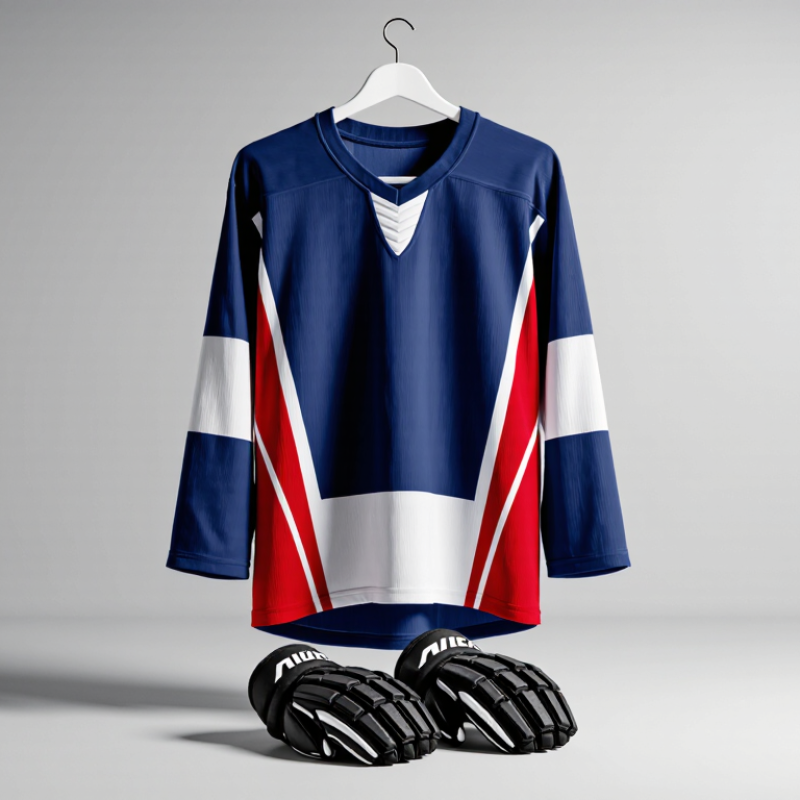
Identify the Purpose and Setting for Your Hockey Jersey
Choose a jersey for the place and purpose where it will be worn. A practice layer should sit comfortably over shoulder pads without pulling across the back. Check the sleeve length with your arms raised. Small detail, big difference. For casual rink sessions, prioritize breathable fabric and easy movement over heavy decoration. If players need to tell teams apart quickly, use clearly contrasting colors and visible numbers.
The Sports & Fitness Industry Association’s 2024 Topline Participation Report recorded more than 2.3 million U.S. ice hockey participants in 2023, a 6.5% increase from the previous year. That growth suggests varied playing settings, from organized teams to informal sessions. The report does not prescribe jersey features, though; match your choice to your own rink, league, and playing frequency. For scheduled competition, ask the organizer about color, numbering, and uniform requirements before ordering.
For watching games, comfort and warmth may matter more than a performance cut. Consider whether you will wear the jersey over a sweatshirt, sit in a cold arena, or walk outside afterward. A loose fit can help with layering, but excess fabric may feel awkward. It is easy to choose by appearance alone. Try the intended layers together, and check the fit before committing.
Compare Jersey Styles, Materials, and Construction
How to Choose the Right Hockey Jersey?
Compare Jersey Styles, Materials, and Construction
Start with how you plan to wear the jersey. A fan-style cut usually feels roomier and works well over a T-shirt. A player-style cut is often trimmer, with longer sleeves and extra space for shoulder pads. Try raising your arms and bending forward; fabric that pulls across the shoulders may feel restrictive during a game. Check the size chart, but treat it as a starting point. Feel the fabric.
Most hockey jerseys use polyester, though knit density and ventilation vary. Open mesh can feel cooler in a warm rink, while denser fabric may hold its shape better through frequent wear. Neither choice is perfect. Look for tidy seams around the collar, cuffs, and underarms, where repeated movement can expose weak stitching. Small details matter. Numbers and lettering may be sewn on or printed; sewn elements often have a raised feel, while printing can sit flatter against the fabric. Inspect the edges for lifting or loose threads. I’d also consider care instructions: a jersey that needs special handling may spend more time stored away than worn.
Choose the Right Size and Fit
A hockey jersey should sit over your shoulder pads, not fit like a T-shirt. Wear the pads you plan to use and measure your chest at its widest point. Measure from the base of your neck to your preferred hem length, too. ISO 8559-1:2017 sets standardized body-measurement definitions for clothing, but a chest measurement alone cannot account for shoulder width or sleeve reach. Check the specific size chart; jersey labels are not universal.
The CDC’s Anthropometric Reference Data for Children and Adults: United States, 2015–2018 reports average adult heights of about 175 cm for men and 162 cm for women. Height alone is a poor shortcut: people of similar height can have different proportions. Compare your chest and torso measurements with the chart, then try the jersey on over your gear. Try it on. Raise your arms, bend forward, and hold a stick. The sleeves should not pull sharply at the shoulders, and the body should cover your pads without dragging near your knees.
A jersey that feels roomy in a shop may feel bulky during play. Too loose? Check whether the extra fabric catches or shifts when you move. Too tight? Recheck the chest measurement over your pads, not against your body. One imperfect fit clue is the mirror; movement tells you more. If you are between sizes, compare sleeve and body length before choosing.
How to Choose the Right Hockey Jersey? - Choose the Right Size and Fit | Size | Approximate Chest Measurement | Typical Fit | Best For | Fit Check |
| XS | 32–34 in (81–86 cm) | Roomy over a light base layer | Smaller frames or a closer casual fit | Check that the shoulders sit comfortably and the sleeves are not restrictive. |
| S | 34–36 in (86–91 cm) | Relaxed, with some layering room | A slimmer build or light underlayers | Raise both arms; the jersey should move without pulling across the chest. |
| M | 38–40 in (97–102 cm) | Standard roomy fit | Many average-build adults wearing a base layer | Make sure the hem covers the waistband and the body does not feel tight when seated. |
| L | 42–44 in (107–112 cm) | Loose, with comfortable layering space | Broader frames or a relaxed everyday fit | Check that the neckline and armholes feel comfortable rather than oversized. |
| XL | 46–48 in (117–122 cm) | Generous fit | Larger frames or wearing thicker layers | Confirm the sleeves do not extend too far past the wrists when arms are relaxed. |
| XXL | 50–52 in (127–132 cm) | Extra-generous fit | Larger frames or a very loose fit | Compare the jersey’s garment measurements with a jersey that already fits well. |
| How to measure: Measure around the fullest part of the chest, keeping the tape level and comfortably snug. These ranges are general estimates, not universal hockey-jersey sizing. For wearing shoulder and elbow pads, try the jersey over the equipment or use the maker’s specific size chart; cuts and measurements can vary. |
Evaluate Team Design, Customization, and Features
A hockey jersey should represent its team clearly without making the design hard to read. Check how the main colors work together under bright rink lights, not only on a screen. Strong contrast helps numbers stand out from the back rows. Look closely at the crest, sleeve stripes, and shoulder details; crowded graphics can compete for attention. Keep it balanced.
Customization should suit how the jersey will be worn. For a name and number, confirm their size, placement, and contrast before ordering. Ask whether the lettering is stitched or printed, since each finish can feel and wear differently. If possible, compare a sample. Small details matter.
Features affect comfort during play or casual wear. Check the fabric weight, ventilation panels, and seam placement, especially under the arms and across the shoulders. A roomy cut may fit over protective gear, but can feel loose without it. Consider your usual layers. I would not choose based on appearance alone; a sharp-looking jersey can still restrict movement. Check the cuffs and collar, too. A tiny fit issue can become annoying after an hour.
How to Choose the Right Hockey Jersey?
Compare these practical jersey-selection factors on a suggested 1–5 checklist scale, where 5 means “especially important to check.”
These ratings are an illustrative buying checklist, not survey results. Check the size chart and care instructions, then compare the team design, available customization, and construction details before choosing.
Check Quality, Care Requirements, and Overall Value
A good hockey jersey should feel sturdy without becoming stiff. Check the seams around the shoulders, sleeves, and side panels. They should lie flat, with no loose threads or puckered fabric. Run your fingers over the printed or stitched details; edges that lift easily may wear faster. Small flaws matter. Also check the collar and cuffs, since these areas stretch with repeated wear. A quick inspection cannot predict every problem, but it can reveal poor finishing before you buy.
Care requirements affect how long a jersey stays comfortable and presentable. Read the label for washing temperature, drying instructions, and any warnings about printed graphics. Cold washing inside out and air drying are often gentler, though the garment’s own instructions should take priority. If special cleaning is required, consider whether you will realistically follow it. That part is easy to overlook. I have sometimes treated care instructions as fine print, then regretted choosing a garment that needed more attention than I expected.
Judge overall value by fit, construction, and likely use—not price alone. A durable jersey worn often may offer better value than a cheaper option that loses shape quickly. Check that the sleeves allow comfortable movement and that the hem sits well over your usual layers. Compare materials and care demands before deciding. Value is partly personal, and this judgment is never perfectly objective. A higher price does not guarantee better quality.
