2026 How to Choose the Right Water Tank Filter?
In 2026, choosing a Water Tank Filter is not simply a matter of buying the finest-looking cartridge. The right choice depends on the tank’s source, storage conditions, and intended use. Rainwater may carry leaves, roof grit, bird droppings, and fine sediment. Bore water can bring iron, hardness, or an unpleasant metallic taste. Municipal backup supplies create different concerns. A filter that performs well in one home may restrict flow in another. That detail is easy to miss.
Dr. Joseph Cotruvo, a water-quality and drinking-water treatment expert, has stated, “There is no such thing as zero risk.” His warning matters here. A Water Tank Filter can reduce selected contaminants, but it cannot correct every water-quality problem. Effective selection begins with a recent laboratory test. Then compare micron rating, flow rate, filter media, tank volume, and replacement intervals. Check whether the housing is suitable for potable water. Look for transparent performance data, not vague claims.
A rural household may need a washable pre-screen, sediment stage, and activated carbon stage. A compact tank may need a smaller system with less pressure loss. UV treatment may be relevant when microbial control is required, but it still needs clear water and reliable power. Maintenance is part of filtration. A clogged cartridge can cause weak pressure and bypass risk. Not every recommendation will fit every property. That is the uncomfortable truth. This guide will compare practical filter types, installation points, operating costs, and warning signs. It will also question attractive specifications that lack independent testing. The best decision is usually measured and based on the water in your actual tank.
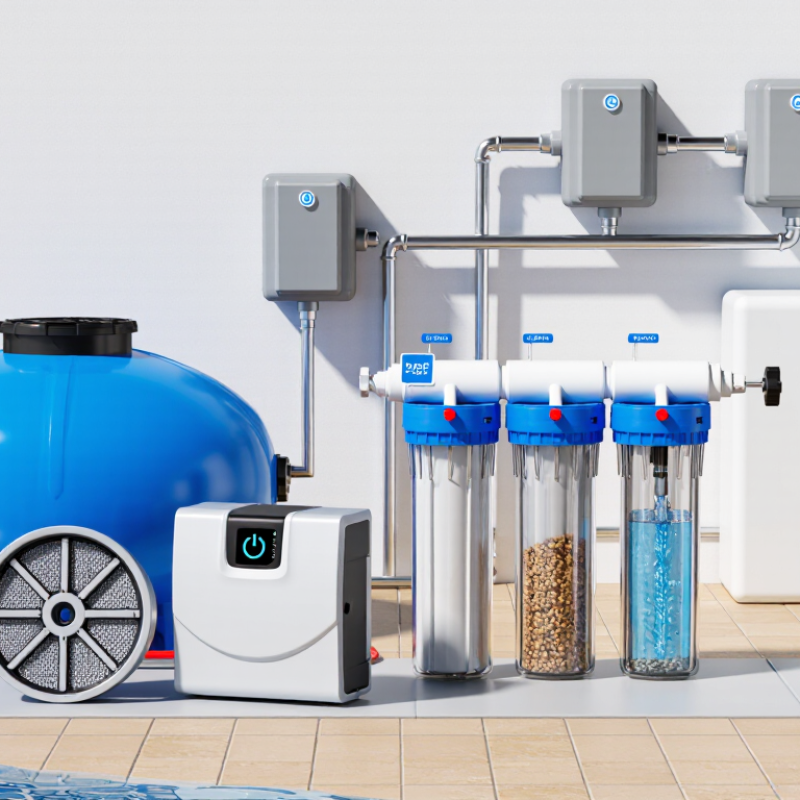
Understanding Water Tank Filter Types and Their Main Uses
Choosing the right water tank filter starts with identifying the water source and its main contaminants. A tank filter is not a universal device.
Mesh or screen filters catch leaves, insects, and larger particles before water enters the tank. They work well for rainwater collection systems. Sediment filters remove sand, rust, and fine silt from stored or incoming water. Their pore size matters. A filter that is too fine may clog quickly, especially after heavy rain.
Carbon filters are useful when water has unpleasant taste, odor, or traces of certain organic compounds. They do not reliably remove all microorganisms. That limitation is important. Activated carbon may need support from disinfection or another treatment stage.
Ceramic filters can reduce many bacteria and suspended particles, but their performance depends on pore structure, flow rate, and proper cleaning. Ultraviolet systems treat microorganisms in clear water, yet they cannot remove mud or chemical pollutants.
The best setup often uses several stages. A coarse screen protects a finer filter, while a final cartridge improves household water quality. During inspections, blocked filters are common. People often choose by price, then overlook replacement intervals. Check flow rate, tank volume, maintenance access, and local water test results. An oversized filter may waste money. An undersized one may restrict supply. I would also leave room for improvement, because seasonal changes can reveal problems that a single test misses.
Assessing Your Water Tank’s Filtration Requirements
2026 How to Choose the Right Water Tank Filter?
Assessing your water tank’s filtration requirements starts with the water source, not the filter housing. Rainwater may carry roof dust, bird droppings, metals, and microbial contamination. Municipal water can still collect sediment after entering an aging tank. The WHO and UNICEF Joint Monitoring Programme reported that 2.2 billion people lacked safely managed drinking water in 2022. That figure makes source verification more than a technical formality.
Test before selecting equipment.
Measure turbidity, pH, hardness, iron, and microbiological indicators, especially after flooding or long storage. The U.S. Centers for Disease Control and Prevention recommends annual testing for private well water, a useful benchmark for other unregulated supplies. A single sample can mislead. Seasonal testing is wiser. Tank cleaning records also matter, because a new cartridge cannot correct a contaminated interior.
Match the filter to the measured risk.
Sediment filtration protects valves and reduces visible particles. Activated carbon can improve taste and reduce some organic chemicals, but it does not reliably remove pathogens. Disinfection may be necessary when bacteria are detected. Look for performance claims supported by recognized standards, such as NSF/ANSI 42, 53, or 58, where applicable. Certification does not cover every contaminant. A filter may appear clean while flow has quietly fallen, so pressure gauges and replacement intervals deserve attention. The uncomfortable detail is simple: many systems are chosen by pipe size rather than actual water quality.
Comparing Filter Materials, Micron Ratings, and Flow Rates
How to Choose the Right Water Tank Filter in 2026
Choosing a tank filter starts with the water itself. Sediment, algae, rust, and organic particles require different protection. I once selected a very fine filter for cloudy rainwater. The water looked clearer, but the filter blocked within days. That shortcut failed.
Filter material affects durability and cleaning. Polypropylene cartridges suit disposable sediment control. Stainless-steel mesh can be washed and reused when particles are larger. Ceramic media may help with fine particles, but it needs careful handling. Check whether the micron rating is nominal or absolute. Nominal ratings provide an estimate. Absolute ratings offer tighter particle control. A smaller micron number is not automatically better.
Flow rate matters at every outlet. A filter rated at 20 liters per minute may perform poorly under low tank pressure. Measure the real flow with a full tank and a partly empty tank. Allow extra capacity for clogging. Pressure loss can become noticeable during showers or irrigation. I prefer checking the manufacturer’s test conditions, although those conditions may not match a household system.
Tips: Match the filter to the particle size, not appearance alone. Record flow before installation. Inspect the cartridge after one week. If it is already dark, the rating may be too fine or the tank needs cleaning. Replace damaged housings immediately. Filter choice is still an informed compromise.
2026 How to Choose the Right Water Tank Filter?
Comparing filter materials, micron ratings, and typical flow rates
This representative comparison shows how filter media affect particle size reduction and water flow. Smaller micron ratings generally provide finer filtration but may reduce flow, while mesh and pleated filters usually allow higher flow rates. Actual performance depends on filter area, water pressure, sediment load, temperature, and filter condition.
Checking Installation, Maintenance, and Replacement Needs
2026 How to Choose the Right Water Tank Filter?
Installation, maintenance, and replacement needs often matter more than filter appearance. The WHO/UNICEF Joint Monitoring Programme reported that 2.2 billion people lacked safely managed drinking water in 2022. This figure makes contamination control a practical priority, not a decorative upgrade.
Measure the tank outlet, pipe diameter, water pressure, and daily demand before purchasing. Install the filter in the correct flow direction, with an accessible shutoff valve and enough space for cartridge removal. A pressure gauge helps reveal clogging. In real installations, limited clearance is often overlooked. That mistake makes routine servicing unnecessarily difficult. Record installation dates, pressure readings, odors, and visible sediment. Replace cartridges by rated capacity, pressure loss, or test results, rather than by habit alone. Follow the filter maker’s instructions and local water authority guidance when cleaning or sanitizing the tank. The U.S. EPA also recommends maintaining treatment devices and changing components on schedule. Waiting for bad taste is too late.
Tips: Choose filtration certified for the contaminant you need to reduce. Sediment filters protect downstream parts, while activated carbon targets many tastes and odors. Do not assume one cartridge removes everything. Keep a simple service log. Test stored water after long shutdowns, heavy sediment, or unusual odor. Replacement timing may still be uncertain, so review your records every month and adjust cautiously.
Selecting a Safe and Cost-Effective Filter in 2026
Choosing a safe water tank filter in 2026 starts with the water, not the price tag. The WHO and UNICEF Joint Monitoring Programme reported that 2.2 billion people lacked safely managed drinking water in 2022. This figure shows why household filtration deserves careful testing. Collect a tank sample first. Check for sediment, odor, microbial risk, and possible metals. A clear sample can still contain invisible contaminants.
Look for independently verified performance claims. NSF/ANSI 42 generally covers taste, odor, and particulate reduction, while NSF/ANSI 53 addresses specific health-related contaminants. Reverse-osmosis systems commonly follow NSF/ANSI 58 requirements. These standards do not mean one filter removes everything. Read the exact contaminant claim. Then compare flow rate with daily household demand. A slow filter may frustrate users and encourage unsafe shortcuts.
Cost needs a wider calculation. Include the housing, cartridges, electricity, water waste, testing, and replacement labor. The U.S. Environmental Protection Agency recommends maintaining treatment systems according to manufacturer instructions, because neglected filters can reduce performance. Replacement intervals also depend on sediment loading, not only calendar dates. That detail is easy to miss. A cheaper filter may become expensive after several clogged cartridges. I would also question impressive percentage claims without laboratory methods or test conditions. No filter is perfect. A practical choice balances verified safety, usable flow, tank size, and realistic maintenance habits.
2026 How to Choose the Right Water Tank Filter? - Selecting a Safe and Cost-Effective Filter in 2026
A practical comparison of common filtration and treatment options for rainwater and stored water systems
| Filter or Treatment Type | Typical Rating or Requirement | Primarily Reduces | Best Use in a Tank System | Typical Service Interval | Indicative Component Cost | Important Limitation |
|---|---|---|---|---|---|---|
| Leaf Screen or Gutter Guard | Usually a coarse mesh; exact opening varies by product | Leaves, twigs, insects and large debris | Pre-filtration at the roof, gutter or tank inlet | Inspect every 1–3 months and after storms | Approximately US$20–US$250 | Does not reliably remove fine sediment, dissolved chemicals or microorganisms |
| Tank Inlet Basket or Calming Inlet | Coarse physical separation; size depends on the tank design | Large particles and disturbed tank sediment | Protecting the tank and keeping settled sediment undisturbed | Inspect at least annually | Approximately US$30–US$180 | Not a final drinking-water barrier |
| Washable Sediment Screen | Commonly about 50–150 micrometres; confirm the rated opening | Sand, rust particles and visible sediment | Reusable pre-filter before pumps, valves or finer cartridges | Rinse when pressure falls or flow decreases | Approximately US$35–US$220 | Mesh size alone does not prove removal of bacteria, viruses or chemicals |
| Pleated Sediment Cartridge | Common options include 5, 10, 20 and 50 micrometres | Fine sediment, silt and particulate matter | Point-of-entry treatment after the tank and pump | Usually every 3–12 months, depending on water quality and pressure loss | Approximately US$10–US$80 per cartridge | A smaller micron rating can reduce flow and clog sooner |
| Depth Sediment Cartridge | Often rated from about 1–50 micrometres, depending on construction | Suspended particles throughout the cartridge depth | Systems with heavier or variable sediment loads | Usually every 1–6 months under heavy sediment conditions | Approximately US$15–US$100 per cartridge | Requires correct housing size and adequate inlet pressure |
| Activated Carbon Cartridge | Performance depends on carbon type, contact time and certified claims | Many taste and odor compounds; some chlorine and selected organic chemicals | Improving taste and odor after effective sediment removal | Commonly every 3–6 months or according to rated capacity | Approximately US$20–US$120 per cartridge | Does not provide dependable microbiological disinfection and can support bacterial growth if neglected |
| Ultraviolet Treatment Unit | UV dose must meet the unit’s validated performance claim; pre-filtration is normally required | Inactivates many bacteria, viruses and protozoa when correctly sized and maintained | Final treatment for microbiologically safer potable water | Clean the sleeve as needed; replace the lamp commonly every 9–12 months | Approximately US$250–US$1,200, plus electricity and lamp replacement | Does not remove sediment or dissolved chemicals; requires power and adequate water clarity |
| Ultrafiltration Membrane | Often approximately 0.01–0.1 micrometres; verify the tested claim | Fine particles and many bacteria and protozoa; virus reduction varies by membrane and certification | Higher-grade point-of-entry or point-of-use treatment | Backwash or clean as specified; membrane life often several years with proper pretreatment | Approximately US$300–US$2,000 | Can reduce flow and may require backwashing, drainage and pressure |
| Reverse Osmosis System | Membrane performance varies; typically installed at a drinking-water outlet | Many dissolved salts, metals, nitrate and other contaminants when specifically rated | A dedicated kitchen tap or other limited-volume drinking-water application | Pre-filters commonly 6–12 months; membrane often 2–5 years, depending on feed water | Approximately US$250–US$1,500 | Produces reject water, needs pressure and is usually inefficient for whole-house tank treatment |
| Chemical Disinfection Dosing | Dose and contact time must follow local requirements and the chemical label | Controls many microorganisms when correctly applied | Larger tanks or systems requiring residual protection | Monitor routinely; replenish chemicals according to demand and test results | Approximately US$150–US$1,500 for basic dosing equipment | Does not remove turbidity or most dissolved contaminants; incorrect dosing can be unsafe |
Selection Checklist for 2026
- For non-potable uses, prioritize leaf screening, tank sediment control and a washable or replaceable sediment filter.
- For drinking water, use a treatment train based on a water test: sediment filtration first, followed by carbon, ultraviolet treatment or another independently validated process when needed.
- Choose filters using verified performance claims, rated flow, pressure drop, contaminant reduction and replacement capacity—not micron size alone.
- Check the tank, roof catchment, plumbing and first-flush arrangement regularly. A filter cannot correct contamination introduced after filtration.
- Indicative prices are planning estimates in US dollars for component purchases only, excluding installation, plumbing changes, laboratory testing and local taxes. Actual costs vary by capacity, location and system design.
Safety note: Rainwater and stored water should be tested before being used for drinking, food preparation, infant feeding or medical purposes. Follow local public-health regulations and the filter manufacturer’s maintenance instructions.