What Is PromaCare TAPP and What Is It Used For?
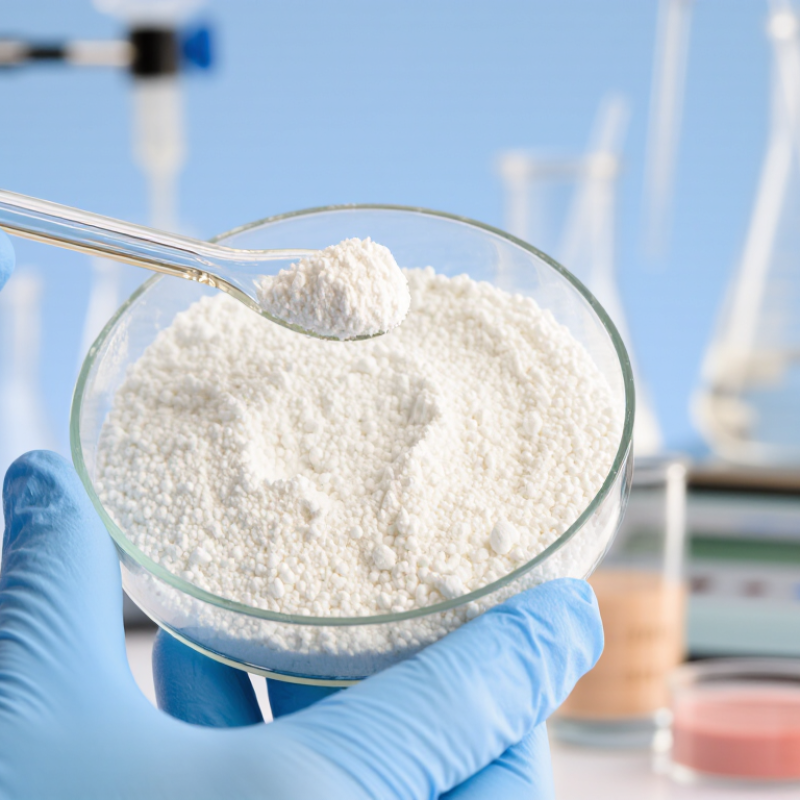
As beauty formulas become more ingredient-conscious, PromaCare TAPP deserves closer attention. Supplier information commonly presents it as a tapioca starch-based cosmetic powder. Its soft, dry texture can help reduce surface oil and improve skin feel. The ingredient is designed for practical formulation work, not dramatic marketing claims.
McKinsey & Company’s 2023 beauty industry report projects the global beauty market could approach $580 billion by 2027. Cosmetics Europe also highlights continuing demand for effective, safe, and responsibly developed products. These trends explain why formulators are examining multifunctional powders such as PromaCare TAPP. It may support a smoother finish in pressed powders, loose powders, foundations, blushers, and selected skincare products. In a typical laboratory trial, a small amount can influence slip, after-feel, and visual softness. The exact result depends on particle size, loading level, oil phase, and formula structure.
Texture matters.
PromaCare TAPP should not be treated as a universal solution. It does not replace preservatives, pigments, UV filters, or validated performance testing. Its suitability must be confirmed through the current technical data sheet, safety data sheet, and finished-product compatibility studies. ISO 16128 may help assess natural-origin calculations, but it does not prove safety or product efficacy by itself. This distinction is easy to miss. A formula can feel silky in the laboratory and still perform poorly during storage or consumer use. Therefore, this article examines what PromaCare TAPP is, how formulators may use it, and which testing questions deserve careful attention before commercial development.
What Is PromaCare TAPP?
TAPP is a cosmetic formulation ingredient designed to support product performance. It is commonly considered in skincare and sun-care formulas where a smooth, stable, and pleasant texture matters. The name itself is a trade designation, so the complete INCI listing should always be checked before evaluation. Trade names can describe a material, but they do not replace technical documentation.
In a finished formula, TAPP may help improve dispersion, spreadability, and the even appearance of functional powders or filters. It can make a cream feel less heavy during application. A formulator may also use it to support a more uniform film on the skin. This matters in products applied across the face, especially when uneven coverage becomes visible under strong light. Performance depends on the full formula, including oil type, emulsifier choice, mixing temperature, and dosage.
Small details matter. A laboratory trial should measure viscosity, particle distribution, skin feel, and storage stability. It should also include compatibility and safety assessments for the intended use level. TAPP is not automatically suitable for every product. That assumption needs checking. In my view, its value is best judged through controlled testing rather than a supplier description alone. Results can change between batches, and even a promising prototype may separate after heat or freeze-thaw testing.
Chemical Composition and Key Properties of PromaCare TAPP
This cosmetic ingredient is a surface-treated titanium dioxide grade for sunscreens and complexion products. Its main functional component is titanium dioxide, a mineral pigment with a high refractive index. That structure helps scatter visible and ultraviolet light. Commercial versions may include alumina and a hydrophobic fatty-acid treatment. The exact coating system can vary, so the current INCI statement and technical data sheet should be checked before formulation.
The surface treatment improves wetting, dispersion, and compatibility with oils. It can also reduce powder agglomeration during mixing. In a cream, the material may support a more even protective film and a cleaner skin tone. Its opacity depends on particle size, concentration, and the surrounding formula. Small changes matter. A poorly dispersed powder can leave white streaks, uneven coverage, or settling.
Formulators usually evaluate viscosity, pH stability, light exposure, and storage performance. They should also test the finished product rather than judging the raw material alone. Titanium dioxide may perform differently in emulsions, sticks, powders, and liquid foundations. Claims about sun protection require validated testing and must follow applicable regional requirements. It is tempting to describe the ingredient as universally stable, but that would be too broad. Processing temperature, shear, oil selection, and coating chemistry can change the final result.
How PromaCare TAPP Functions in Cosmetic Formulations
PromaCare TAPP is a surface-treated titanium dioxide ingredient used in cosmetic formulations, especially sunscreens, daily moisturizers, and complexion products. Its particles help reflect, scatter, and absorb ultraviolet radiation across the skin surface. The treatment improves powder dispersion and reduces particle clumping in oil-based systems. This matters during manufacturing. Uneven particles can create weak protection zones.
Formulators usually combine TAPP with emollients, dispersants, and film-forming agents. These materials help spread the powder into a smoother, more continuous layer. The result can be better coverage, improved texture, and less visible whitening on the skin. Still, particle size and coating chemistry strongly affect performance. Smaller particles may look more transparent, but they are not automatically better.
A 2022 GLOBOCAN report recorded more than 1.5 million new skin cancer cases worldwide, highlighting the importance of dependable UV protection. However, TAPP is not a magic shield. Laboratory SPF depends on concentration, film thickness, dispersion quality, and the complete filter system. Real-world protection also falls when users apply too little product. The European Commission’s consumer guidance commonly recommends about 2 milligrams per square centimetre for sunscreen testing, yet practical application is often lower. This gap deserves more attention. A well-designed formula should balance protection, comfort, stability, and appearance rather than chase one impressive number.
Common Applications of PromaCare TAPP in Personal Care Products
PromaCare TAPP is a specialty cosmetic ingredient used in skin-conditioning formulations. It is commonly included in creams, lotions, serums, and barrier-support products. Formulators may select it to improve skin softness, moisture retention, and the appearance of dryness. Some formulas also position it for soothing care and smoother-looking fine lines. Results depend on concentration, packaging, skin type, and the complete formula.
Its relevance is growing as consumers seek practical skin-barrier benefits. A 2023 McKinsey beauty-market report projected the global beauty sector could approach 590 billion dollars by 2028, with skincare remaining a major category. Grand View Research estimated the global skincare market at about 155.7 billion dollars in 2023. These figures support demand, but they do not prove the performance of one ingredient.
In daily products, TAPP may appear in lightweight emulsions, night creams, hand creams, and sensitive-skin routines. A dry-feel lotion can use it alongside humectants and emollients, creating a softer finish without excessive greasiness.
Laboratory testing should assess stability, compatibility, and sensory performance. The evidence is promising, not perfect. Human-use testing still matters. Formulators should avoid treating TAPP as a miracle active, because visible results may be gradual and inconsistent across users.
Formulation, Safety, and Regulatory Considerations
TAPP is a cosmetic raw material used in topical formulations, not a finished medicine. Its precise function depends on the declared INCI name, concentration, and supplier specification. In practice, formulators may select it for conditioning, texture control, film formation, or skin-protection support. The trade name alone is not enough. A complete technical dossier should identify purity, residual solvents, heavy metals, microbiological limits, stability, and recommended use levels.
Safety depends on the finished formula. Assessments should include skin irritation, sensitisation, eye exposure, photostability, and realistic daily application. The European Commission’s Scientific Committee on Consumer Safety expects safety conclusions to reflect exposure from all relevant cosmetic products. Cosmetics Europe reported approximately €104 billion in European cosmetics retail sales in 2023, showing why consistent quality and traceable documentation matter across large supply chains. Still, market size does not prove ingredient safety. More testing may be needed.
Tips: Confirm the current INCI entry before formulation. Check batch certificates and impurity limits. Conduct stability testing in the final packaging. Regulatory acceptance also varies by region. In the European Union, the product information file and safety report must support compliance with Regulation (EC) No 1223/2009. In the United States, MoCRA requires stronger facility registration, product listing, and adverse-event controls. Claims should remain evidence-based. “Improves appearance” is safer than a therapeutic promise. A practical weakness remains: public data on some specialty ingredients can be limited, so independent testing and expert review are worth the cost.
What Is PromaCare TAPP and What Is It Used For?
PromaCare TAPP is a trade designation rather than a standardized INCI name. Its cosmetic use, safety profile, and regulatory status must therefore be confirmed through the supplier’s exact INCI identity, specification, composition, and intended application. The chart below presents practical formulation and compliance priorities for evaluating this type of cosmetic active.
Priority scores are development-screening values on a 1–5 scale, not legal limits or guaranteed product performance. Final decisions should be supported by stability testing, toxicological assessment, exposure evaluation, GMP documentation, and claim substantiation in each target market.
