Skip to content

10 Tips for Buying Team Kits in Bulk

Ordering Team Kits in bulk can simplify a season, but the wrong choices may leave a club with boxes of unused shirts. Sizes, fabric, printing, delivery dates, and replacement stock all deserve attention before approving a quote. Small details matter.

The environmental context is worth considering. Textile Exchange’s Materials Market Report 2024 estimates that global fiber production reached 124 million tonnes in 2023, with polyester accounting for about 57 percent. Separately, the United Nations Environment Programme has reported that the world generates roughly 92 million tonnes of textile waste each year. These figures describe the wider textile industry, not team uniforms alone. Still, they make a practical case for ordering carefully, checking product durability, and avoiding quantities based on guesswork.

Bulk purchasing can reduce unit costs, yet price is only one part of the decision. A low-cost kit may prove expensive if its sizing runs inconsistently, colors fade, or replacement pieces are unavailable midseason. Ask suppliers for a size set, fabric details, print samples, and a written delivery schedule. Confirm whether names and numbers affect production time. Also check how the supplier handles late additions. That can be the weak point.

The tips below focus on decisions clubs can verify before placing an order. They are useful for coaches, schools, and community teams, though every group has different needs. No checklist can prevent every delay. Careful planning can make the next order clearer, more consistent, and less likely to create unwanted stock.
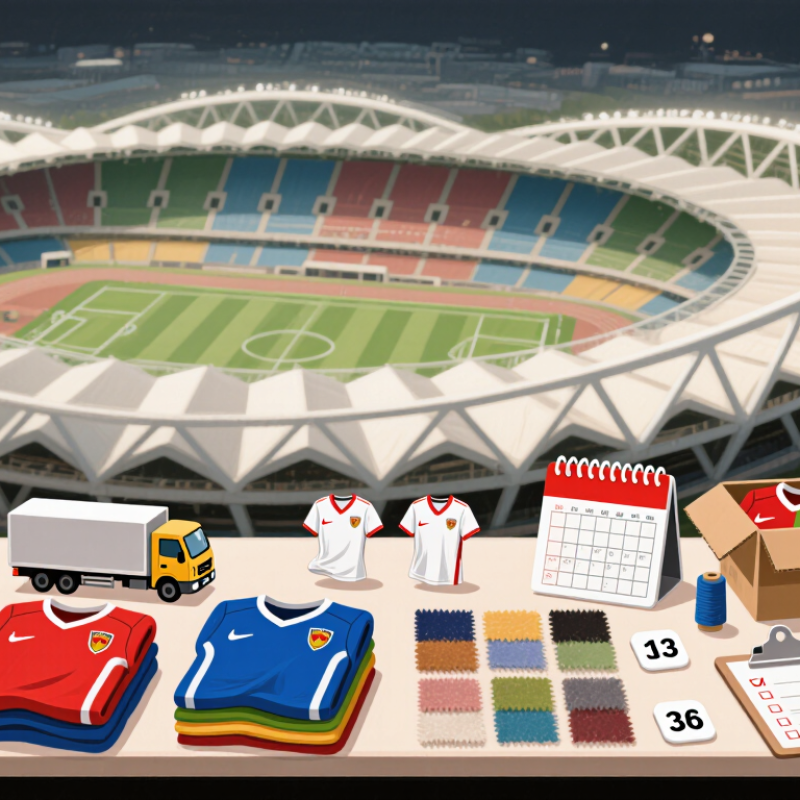
10 Tips for Buying Team Kits in Bulk

Assess Team Needs, Kit Types, and Size Requirements

Before requesting quotes, list the team’s actual needs: player count, age groups, training frequency, and competition schedule. A match kit may need durable, coordinated tops and shorts; training kits may need lighter, quicker-drying layers. Ask coaches which pieces are essential and which are optional. That distinction helps prevent a bulk order from filling storage with unused extras.

Tips: Collect each player’s preferred size, then check the supplier’s measurement chart against chest, waist, and inseam measurements. Record goalkeeper and staff needs separately. Order a sample garment if timing allows. A first size estimate is rarely perfect; treat it as a forecast, not a promise. Small detail. Big difference.

Build a size list before approving quantities, and agree on how late roster changes will be handled. Leave room for exchanges or a small reserve, but avoid guessing too generously. The National Retail Federation’s 2023 Retail Returns Landscape report estimated $743 billion in retail merchandise returns, equal to 14.5% of annual sales. That figure covers retail broadly, not team kits specifically, yet it shows why fit decisions deserve attention. Keep a written record of sizes, garment types, and confirmed quantities. Check it twice.

Compare Suppliers, Materials, and Product Quality

Buying team kits in bulk requires more than comparing unit prices.

Tip: Ask each supplier for the same written specification, including fabric weight, fiber content, size range, decoration method, delivery window, and replacement policy.

Textile Exchange’s Materials Market Report 2024 estimates that global fiber production reached 124 million tonnes in 2023, with polyester accounting for 57%. That figure describes market supply, not garment quality. Check the actual fabric and construction.

Compare materials against the team’s use.

Polyester often dries quickly, while cotton blends may feel softer but hold more moisture.

Tip: Request fabric swatches and wash-test them before approving a large order. Check whether colors fade, seams twist, or printed numbers crack.

Small differences matter. Supplier descriptions can sound similar, yet fabric weight and finish may vary.

Assess product quality with a sample from the production range, not just a polished showroom piece.

Inspect collar stitching, seam strength, mesh panels, and size consistency across several garments.

Tip: Confirm whether the supplier can provide documented test results for colorfastness and shrinkage, and clarify how defects are handled.

Test before scaling.

I would also keep one approved sample as a reference; it is easy to overlook small changes when the full shipment arrives.

Calculate Bulk Quantities, Costs, and Budget

Bulk orders can lower the price per kit, but only when the quantity matches your roster. Start with a current player list and record each person’s size, preferred fit, and kit components. Add coaches, substitutes, and expected new members separately. For example, a 20-player squad may need 23 kits if three replacements are sensible. Check size charts against actual measurements; last season’s sizes are only a rough guide.

Tip: Build a simple quantity sheet. List shirts, shorts, socks, and optional extras in separate columns. Multiply each item’s unit price by its quantity, then add setup, personalization, packaging, and delivery charges. Ask for a written quote that shows which costs are included. Small fees can change the budget.

Keep a modest reserve for late registrations or sizing changes, but avoid ordering many spare kits without a clear reason. Compare the total landed cost, not just the advertised unit price. Set a spending ceiling and leave room for price changes or unexpected shipping costs. I once underestimated replacement needs; the extra order was awkward and more expensive. It was a useful reminder to check the roster twice and confirm delivery timing before paying.

10 Tips for Buying Team Kits in Bulk - Calculate Bulk Quantities, Costs, and Budget

# Tip Quantity or Cost Check Example Calculation Budget Planning Note
1 Confirm the roster first. Use the current player and staff count as your starting quantity. Count everyone who needs a complete kit before adding extras. 24 players = 24 required kits before spares. Check the roster with the team coordinator to reduce late additions and unnecessary purchases.
2 Allow for a practical number of spare kits. A 10%–15% allowance is a useful planning range; round up to whole kits. 24 players × 12.5% = 3 spare kits; order 27 kits total. Spare kits can help cover new players, replacements, or sizing changes.
3 Collect sizes before requesting a final quote. Make sure the size quantities add up to the roster count, then allocate spare sizes based on likely needs. Example roster: 4 small, 8 medium, 8 large, and 4 extra large = 24 kits. Use a consistent size chart and allow time for players to check measurements.
4 Compare price breaks using the same specifications. Compare unit prices at the quantities you may order, while keeping kit contents and customization requirements consistent. Illustrative quote: 27 kits at $42 each; 33 kits at $40 each. A lower unit price does not automatically mean a lower total spend. Compare the full order cost.
5 Calculate the merchandise subtotal. Order quantity × quoted unit price = kit subtotal. 27 kits × $42 = $1,134. Confirm whether the quoted unit price includes every item in the kit.
6 Add delivery and other quoted charges. Kit subtotal + shipping and handling = pre-tax estimated cost. $1,134 + illustrative $55 shipping = $1,189. Shipping estimates can vary with delivery location, order size, and delivery speed.
7 Check applicable taxes separately. Confirm the local tax rate and which charges are taxable before approving the budget. If an illustrative 8% tax applies to the $1,134 merchandise subtotal: $1,134 × 8% = $90.72. Actual tax treatment depends on the location and applicable rules; verify it with the seller or relevant tax authority.
8 Include a contingency allowance. Set aside a defined percentage for possible price changes or incidental costs. 10% of the $1,189 subtotal plus shipping = $118.90. Using the examples above, a planning total is $1,189 + $90.72 tax + $118.90 contingency = $1,398.62.
9 Check the cost per rostered player. Estimated planning total ÷ number of players = estimated budget per player. $1,398.62 ÷ 24 players = approximately $58.28 per player. Divide by roster size, not order size, when planning how much each player or team budget must cover.
10 Approve quantities and costs before production. Confirm the final size breakdown, kit contents, delivery estimate, and written total. Final approval example: 27 kits, including 3 spares, at the confirmed quoted price. Keep the approved quote and size list together so changes can be reviewed before the order is placed.

Note: Prices, shipping, and tax figures are illustrative planning examples only. Replace them with a current quote and locally applicable costs before placing an order.

Confirm Customization Options, Lead Times, and Order Terms

Bulk team-kit orders need more than a size list. Confirm which items can be customized, including shirt colors, player names, numbers, and logo placement. Ask for a digital proof before production, and check spelling against your roster. A small typo can affect an entire batch. If colors must match across shirts and shorts, request a sample or written color reference.

Tips: Set a firm date when kits must arrive, then ask for the production schedule and shipping estimate separately. Leave room for approval, revisions, and late roster changes. Ask what happens if production runs behind. Confirm minimum quantities, payment dates, size-exchange rules, and the process for correcting damaged or incorrect items. Keep the answers in writing.

Order terms can look clear until details are missing. Check whether the quoted price includes customization, packaging, and delivery. Make sure the invoice matches the agreed sizes and quantities before paying. It is easy to assume a proof covers every garment, but it may show only one design. I would double-check that point, especially when several age groups need different names or numbers. A simple checklist can prevent rushed changes later.

10 Tips for Buying Team Kits in Bulk

Confirm customization options, lead times, and order terms before placing your order.

Illustrative planning example in business days, not a supplier guarantee. Confirm artwork, sample approval, production, quality checks, and shipping timelines with your vendor.

Review the Delivery and Organize Kit Distribution

Before the cartons leave, confirm the delivery date, drop-off address, and receiving contact in writing. Ask the supplier for tracking details and a packing list showing quantities, sizes, and any separate items. Plan for someone to count the boxes when they arrive, rather than leaving them unattended. Check the labels against your order, then inspect several kits for missing pieces, incorrect sizes, or damage. Keep the paperwork and take clear photos of any mismatch. Do not assume the full order is correct just because the box count matches. Small errors spread.

Set aside a clean table and sort kits by team, then by player or size. Label each bag with the player’s name and the kit contents, using the final roster as your reference. Keep a separate section for spare items and unresolved orders. A printed checklist helps volunteers mark each kit as it is handed over; record uncollected kits and arrange a clear pickup time. Keep it simple. Even a careful roster can contain a late change, so leave space to correct labels before distribution. One imperfect detail is easy to miss: socks or shorts may be packed separately, so check the packing list before telling families their kits are complete.