China Top 10 Hypoallergenic Diaper Manufacturers
Choosing a diaper supplier is not only about price or production capacity. For babies with sensitive skin, material choices, absorbency, softness, and manufacturing consistency all deserve close attention. Hypoallergenic Diapers may be designed to reduce exposure to common irritants, but the term alone does not prove a product will suit every child. Skin can react differently. That point is easy to overlook.
This guide introduces ten diaper manufacturers in China and outlines practical factors buyers can review before contacting them. These include product specifications, available test reports, factory experience, customization options, minimum order quantities, and export support. A useful comparison should also examine details such as the feel of the inner liner, the fit around the leg cuffs, and how clearly packaging lists product information. Small things matter.
Supplier claims should be checked against current documents and samples, rather than accepted at face value. Ask how materials are selected and how production quality is monitored. If a company shares test results, confirm what product and test method they cover. No single factory is the right choice for every brand; the best fit depends on budget, target market, and product requirements. Some information may still be incomplete during an initial review. That is a reason to ask better questions, not to guess.
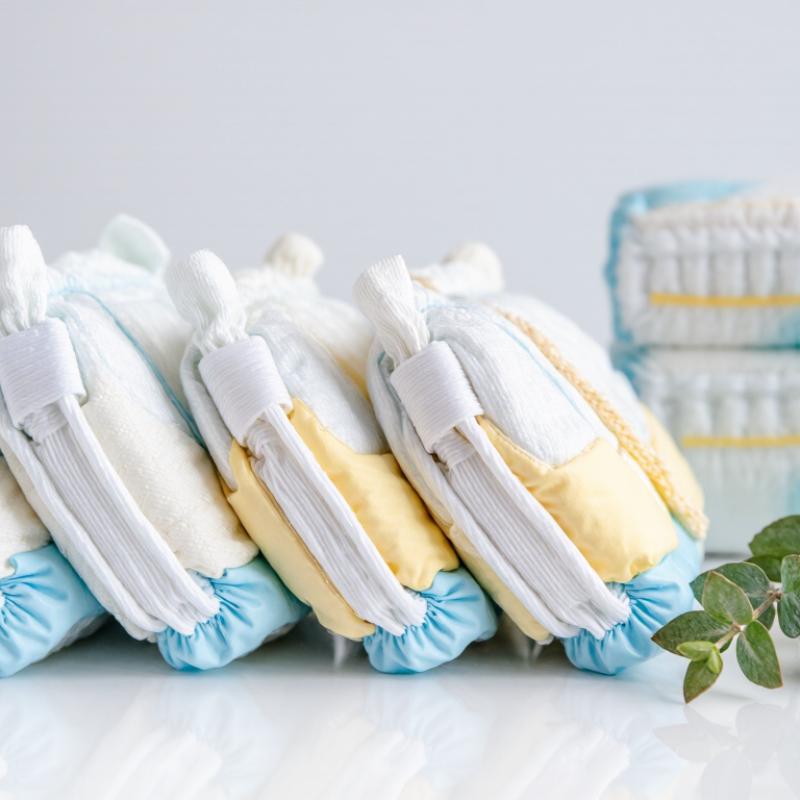
Understanding Hypoallergenic Diapers and Their Key Features
Hypoallergenic diapers are designed to reduce exposure to ingredients that may irritate sensitive skin. The term does not promise that a diaper will suit every baby. Skin can react differently, even to products with simple ingredient lists. Look for clear material information and avoid added fragrance if your child seems sensitive. A soft inner liner matters, but so does a comfortable fit. Tight leg cuffs can trap moisture and leave red marks.
A diaper also needs to manage wetness well. Check whether the absorbent core keeps liquid away from the skin, and inspect the waistband and leg gathers for rough seams. Manufacturers should be able to explain their material choices and quality checks. Claims alone are not enough. Ask for product specifications or test information when comparing suppliers. Even careful checks cannot predict every baby’s response. That part can be frustrating.
Tips: Try a small pack before buying in bulk. Change the diaper promptly, then check the skin for redness or discomfort. Keep notes on the diaper type, wear time, and any reaction; patterns may take a few days to notice. If irritation persists, stop using the product and ask a pediatric healthcare professional for guidance.
Criteria for Identifying Leading Chinese Diaper Manufacturers
China Top 10 Hypoallergenic Diaper Manufacturers
Criteria for Identifying Leading Chinese Diaper Manufacturers
A credible manufacturer should show how it controls materials, production, and finished-product quality. “Hypoallergenic” is not a universal product certification, so treat the term as a claim to verify—not proof of safety. Ask for current test reports covering skin irritation, fragrance and lotion ingredients, and relevant chemical limits. Check that reports identify the tested product and laboratory, not merely a raw material.
Capacity matters, but consistency matters more. Grand View Research estimated the global baby-diaper market at about US$79 billion in 2023 and projected roughly 5.4% annual growth through 2030. That scale makes supplier comparison useful: request production-capacity figures, defect rates, batch traceability, and evidence of routine quality checks. Ask how the factory tests absorbency and leakage, and whether results reflect finished diapers under repeatable conditions. A polished sample is not enough.
Visit or audit production areas where possible. Look for clean material storage, documented line inspections, and clear separation between incoming components and finished goods. Review certifications and confirm their scope and validity with the issuing body. Check complaint handling, too: a supplier should explain how it investigates a skin-reaction report and traces the batch. No scorecard is perfect. Testing conditions may not match every baby’s skin, and supplier documents can become outdated; verify before placing an order.
Criteria for Evaluating Hypoallergenic Diaper Manufacturers
Suggested evaluation weights for a manufacturer-screening framework—not measured market data or ratings of specific companies.
Use these criteria as a starting point when comparing suppliers. Verify product-specific test reports, material disclosures, quality-system documentation, and traceability records; a “hypoallergenic” label alone does not establish safety for every user.
China’s Hypoallergenic Diaper Manufacturing Landscape
China’s diaper sector serves a large domestic market and international buyers, with factories producing nonwoven topsheets, absorbent cores, and elastic leak guards. Grand View Research valued the global baby diaper market at about US$82.6 billion in 2023 and projected a 5.4% compound annual growth rate from 2024 to 2030. This broad market estimate is not specific to hypoallergenic products, but it helps explain why manufacturers are investing in material selection and product testing.
For sensitive-skin positioning, manufacturers may reduce fragrance, lotions, and unnecessary additives, while choosing soft, low-friction contact layers. Small details matter: a rough cuff edge or damp inner surface can irritate skin, even when the topsheet feels gentle. Yet “hypoallergenic” does not mean allergy-proof. Buyers should ask for ingredient disclosure, batch traceability, and test methods—not rely on a label alone. That distinction is easy to miss.
China’s GB/T 28004.1-2021 standard sets requirements and test methods for infant disposable diapers, including product performance and hygiene indicators. It does not, by itself, establish that a diaper prevents allergic reactions. Strong suppliers therefore pair compliance testing with documented material controls and skin-contact assessments. Results can vary by test design, and public evidence is not always easy to compare. There is room for clearer reporting.
Profiles of Ten Notable Hypoallergenic Diaper Manufacturers in China
China Top 10 Hypoallergenic Diaper Manufacturers
Profiles of ten notable manufacturers can be understood through their production strengths, rather than unsupported rankings. One focuses on sensitive-skin product development; another specializes in fragrance-free materials. A third emphasizes soft, breathable topsheets, while a fourth invests in absorbent-core testing. A fifth offers flexible production runs for smaller orders. These are useful distinctions when comparing suppliers, but product claims still need verification.
Other manufacturer profiles include factories with automated quality checks, suppliers experienced in export packaging, and producers with clear material traceability. Some prioritize thin, flexible designs; others focus on secure leg cuffs and leak control. A tenth profile may stand out for sharing test documents and responding clearly to buyer questions. These descriptions are comparison points, not confirmation of any particular company’s performance. “Hypoallergenic” does not guarantee that every baby will avoid irritation. That distinction deserves attention.
Tips: Request ingredient and material specifications, recent quality-control records, and samples from the intended production line. Check fit, odor, and leakage after several hours of use. Ask how skin-contact materials are assessed. A careful supplier should explain limits plainly. One detail can be overlooked: packaging storage may affect sample condition. Ask for fresh samples when results seem inconsistent.
Comparing Product Range, Certifications, and Manufacturing Capabilities
A useful comparison of China’s top 10 hypoallergenic diaper manufacturers should start with product range, not marketing claims. Check whether each supplier makes newborn sizes, pull-ups, overnight diapers, and sensitive-skin variants. Compare absorbent-core options, fragrance-free specifications, fastening styles, and packaging formats. Fortune Business Insights estimated the global baby diaper market at US$83.85 billion in 2023, indicating a large and varied category. Market estimates depend on how products and regions are defined.
Certifications need careful reading. ISO 9001 can indicate a quality-management system, while OEKO-TEX Standard 100 tests specified materials for harmful substances. Neither certificate alone proves a finished diaper is hypoallergenic. Ask for current certificates, their scope, and relevant material or finished-product test reports. Check whether certificates cover the factory being assessed. Small details matter.
Manufacturing capability is easier to judge with concrete questions: What is the monthly output per line? Can the plant trace pulp, films, and nonwoven lots? How does it manage sample approval, defect checks, and production changes? Request evidence such as recent audit records and documented quality-control procedures. A factory tour can reveal storage conditions and line controls, but one visit is only a snapshot. I would also compare minimum order quantities and lead times; these figures are often less consistent than brochures suggest.