Skip to content

Top Polyester Spunlace Nonwoven Fabric Suppliers

Polyester Spunlace Nonwoven Fabric is gaining attention across hygiene, medical, filtration, wipes, and industrial applications. Its soft surface, stable strength, and adaptable basis weight support demanding production environments. A finished roll can look simple, yet its performance depends on fiber length, web uniformity, hydroentanglement pressure, drying control, and finishing chemistry.

Market data explains this expanding interest. Grand View Research estimated the global nonwoven fabric market at approximately USD 53.51 billion in 2023. The same report projects a 7.8% compound annual growth rate from 2024 to 2030. This figure covers multiple nonwoven technologies, not spunlace alone. That distinction matters. Smithers’ global nonwovens analysis also highlights hygiene, healthcare, filtration, and durable applications as important growth areas. Meanwhile, EDANA and INDA provide technical and market references for producers, converters, and buyers evaluating capacity, sustainability, and product performance.

Selecting top suppliers requires more than comparing prices. Reliable manufacturers should demonstrate consistent tensile strength, absorbency, basis-weight tolerance, and roll quality. Certifications such as ISO 9001, OEKO-TEX, and relevant medical or food-contact approvals may strengthen supplier credibility. Buyers should also inspect production lines, laboratory records, traceability systems, and export experience.

Public information is uneven. No ranking is flawless. Some suppliers publish impressive specifications but provide limited test evidence. Others offer strong engineering support without broad online visibility. This guide therefore considers measurable quality, production capability, customization, compliance, delivery reliability, and practical customer experience. These factors help buyers identify Polyester Spunlace Nonwoven Fabric suppliers that fit real operating requirements, rather than attractive claims alone.
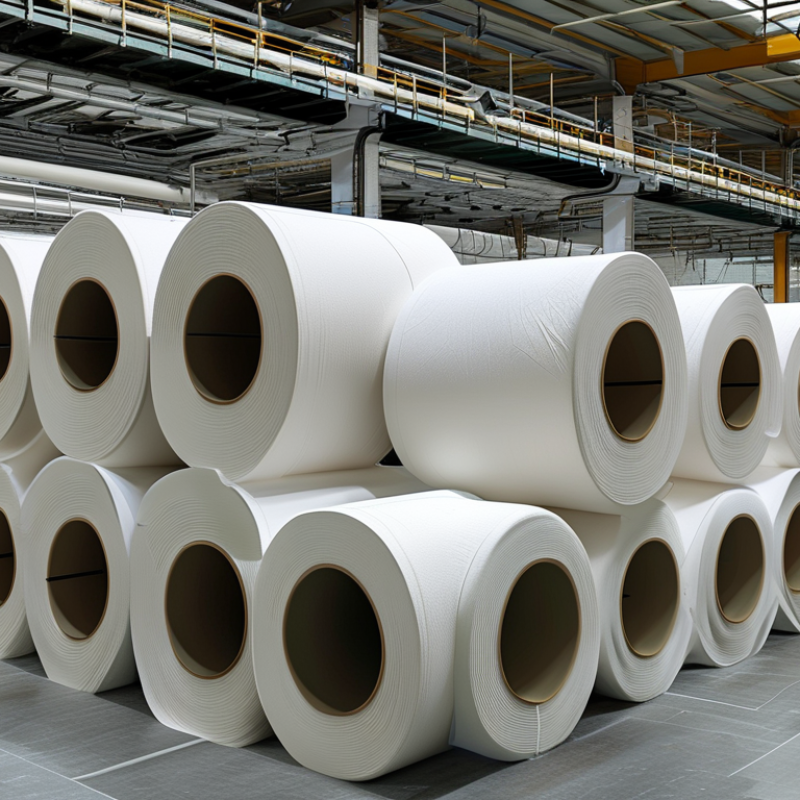
Top Polyester Spunlace Nonwoven Fabric Suppliers

What Is Polyester Spunlace Nonwoven Fabric?

What Is Polyester Spunlace Nonwoven Fabric?

Polyester spunlace nonwoven fabric is made from polyester fibers bonded by high-pressure water jets. It is not woven or knitted. The water tangles the fibers into a stable sheet without relying mainly on chemical adhesives. After hydroentanglement, the fabric is dried, finished, and sometimes embossed for texture.

The surface feels soft but remains fairly strong during wiping, folding, and handling. Polyester also offers good abrasion resistance and dimensional stability. However, it is naturally less absorbent than cotton. Manufacturers may add a suitable finish to improve liquid pickup, but performance can vary.

In practical testing, I check absorbency, lint release, tensile strength, and thickness instead of trusting appearance alone.

This material appears in industrial wipes, personal-care sheets, filtration layers, and selected medical products. For hygiene applications, clean production conditions and traceable testing matter.

A reliable supplier should provide fiber information, basis weight, roll width, and test results. It should also explain whether the fabric is hydrophilic, antistatic, or treated for a specific use.

Small differences can change the user experience. A soft sample may still tear under pressure. That is easy to overlook.

For regulated medical applications, buyers must verify applicable standards and local compliance before production.

Key Performance Features and Common Product Variations

Top Polyester Spunlace Nonwoven Fabric Suppliers

Key performance differences often appear during converting, not in a supplier’s brochure. Spunlace fabric uses high-pressure water jets to entangle polyester fibers. This process creates softness without traditional chemical binders. Smithers reported that global nonwovens demand is expected to keep expanding through 2028, supported by hygiene, filtration, and industrial applications. That growth increases pressure on suppliers to provide stable quality, not only attractive prices.

Important specifications include basis weight, tensile strength, elongation, wet strength, absorbency, thickness, and pore structure. A higher tensile number is not automatically better. Excessive strength can reduce drape and increase cutting waste. In converting trials, a 40–80 gsm fabric may suit wipes, while heavier 100–200 gsm grades can support filtration or protective covers. The exact range depends on fiber diameter and hydroentanglement energy. EDANA technical guidance also emphasizes consistent roll quality, because small basis-weight variations can affect dosing and sealing.

Common variations include virgin or recycled polyester, hydrophilic or hydrophobic finishes, apertured surfaces, embossed patterns, and colored grades. Some suppliers offer low-lint versions for cleanroom use. Others provide high-loft structures for cushioning. Recycled content can improve circularity claims, but it may influence whiteness, odor, and strength. That trade-off deserves testing. ASTM performance methods and ISO-based quality systems help compare suppliers more reliably, although laboratory results may not fully predict line performance. Trial rolls remain essential. Supplier data is useful, but production evidence matters more.

How to Evaluate Top Polyester Spunlace Nonwoven Fabric Suppliers

Top Polyester Spunlace Nonwoven Fabric Suppliers

How to Evaluate Top Polyester Spunlace Nonwoven Fabric Suppliers

A strong supplier should prove performance, not merely display a polished catalogue. Smithers projects the global nonwovens market will exceed US$68 billion by 2028. Demand is growing, but quality still varies between production lines.

Request samples at the exact target weight, width, and finish. Test basis-weight variation, tensile strength, elongation, absorbency, lint, and hydroentanglement uniformity. A 60 gsm sample may perform differently after storage or converting. Ask for three batch samples, not one. Small details matter.

Review fiber origin, recycled content, water treatment, and process traceability. Verify ISO 9001 and ISO 14001 certificates through their issuing bodies. Certificates can expire. Request recent batch records, laboratory methods, and corrective-action reports. INDA industry guidance emphasizes consistent testing for wipes and hygiene nonwovens, especially strength, lint, and liquid handling.

Visit the factory when possible. Watch fiber opening, web formation, jet pressure, drying, and roll inspection. Ask how rejected rolls are controlled. A supplier avoiding this question deserves caution. Price comparisons also need freight, minimum order quantity, lead time, and claim handling. I would not trust a perfect audit alone; one unannounced production check may reveal more.

Major Applications Across Industrial and Consumer Markets

Top Polyester Spunlace Nonwoven Fabric Suppliers

Major Applications Across Industrial and Consumer Markets

Polyester spunlace nonwoven fabric supports demanding industrial and consumer applications. Its entangled fiber structure offers softness, strength, and consistent surface quality. Suppliers often adjust weight, thickness, fiber blend, and finishing methods for specific end uses.

In industrial settings, manufacturers use it for filtration layers, automotive interior components, insulation covers, and construction membranes. It can also support furniture backing and protective packaging. Each application needs different performance data. Tensile strength matters for reinforcement, while air permeability matters for filtration. Moisture resistance can be critical in building materials. Small differences affect production results.

Consumer markets use polyester spunlace in cleaning wipes, personal care sheets, mattress layers, and household protective materials. The fabric feels smooth against skin, but comfort depends on fiber fineness and finishing chemistry. Some suppliers provide roll traceability, batch testing, and documented quality controls. These details help buyers investigate uneven absorbency or weak edges.

No fabric solves every problem. A stronger grade may feel less flexible. A softer grade may tear during high-speed converting. This trade-off is easy to overlook. Buyers should request samples, test them under actual production conditions, and compare results over several batches. Supplier experience matters, but practical verification matters more. Specification sheets can look convincing. Factory performance may still disappoint.

Sourcing, Quality Control, and Supplier Selection Considerations

Selecting a polyester spunlace nonwoven supplier requires more than comparing quotations. Grand View Research valued the global nonwoven fabric market at approximately USD 53 billion in 2023, with continued growth expected through 2030. This expansion increases supplier choices, but not necessarily supplier reliability. Request production samples with defined GSM, width, moisture content, tensile strength, and elongation. A soft hand feel is useful. It is not proof of consistent performance.

Quality control should follow the fabric’s end use. For wipes, check absorbency rate, liquid retention, lint release, and roll cleanliness. For medical or hygiene applications, review microbial controls, packaging conditions, and traceability records. ASTM and ISO test methods should appear on inspection reports, not only in sales literature. Smithers’ nonwovens industry outlook highlights performance requirements and sustainability pressures as major market drivers. Therefore, ask for fiber composition evidence, recycled-content verification, and wastewater-control records when relevant.

Supplier selection also depends on operational discipline. Audit raw-material storage, carding lines, hydroentanglement pressure, drying systems, and final inspection areas. Confirm whether the supplier can maintain tolerances across repeated orders. One overlooked detail is core alignment; poor winding can create feeding problems during converting. I have seen attractive samples hide unstable roll hardness. That is why a pilot order matters. It exposes weaknesses. A supplier’s response to defects may reveal more than its certificate list. Recheck every assumption before signing a long-term agreement.

Top Polyester Spunlace Nonwoven Fabric Suppliers - Sourcing, Quality Control, and Supplier Selection Considerations

Supplier Profile Typical Product Range Common End Uses Indicative MOQ Typical Lead Time Key Quality Controls Documents to Request Selection Consideration
High-volume industrial producer Hydroentangled polyester rolls, approximately 30–120 gsm, with standard and custom widths Wipes, filtration media, industrial cleaning materials, protective covers Usually 500–2,000 kg per specification About 3–8 weeks, depending on production capacity and customization Basis weight, thickness, tensile strength, elongation, absorbency, roll length, and visual defects Technical data sheet, certificate of analysis, lot traceability record, and inspection report Best suited to buyers requiring stable repeat production and competitive unit cost
Custom-development supplier Customized gsm, color, embossing, hydrophilic or hydrophobic treatments, and slit widths Medical disposables, personal care, specialty wipes, and engineered composite materials Commonly 300–1,000 kg for development or customized orders Approximately 4–10 weeks, including sample approval Treatment uniformity, color consistency, surface appearance, lint level, and performance after aging Approved sample, specification sheet, change-control procedure, and test-method references Prioritize technical communication, prototyping capability, and documented change management
Medical-grade material supplier Clean, low-lint polyester spunlace for gowns, drapes, swabs, and procedure packs Healthcare and controlled-environment applications Often 500–1,500 kg, subject to validated production requirements Around 4–12 weeks, especially when validation or special packaging is required Bioburden where applicable, lint, cleanliness, tensile performance, absorbency, and packaging integrity Quality-management certification, validation records, lot release data, and regulatory declarations applicable to the product Verify that the supplier’s quality system matches the intended medical application and regulatory market
Sustainable-material supplier Recycled-polyester spunlace, mass-balance options where applicable, and reduced-packaging formats Retail wipes, packaging components, apparel interlinings, and environmentally focused consumer products Typically 500–2,000 kg per color and specification Approximately 4–10 weeks, with additional time for certified raw-material scheduling Recycled content verification, gsm, tensile strength, colorfastness, contamination control, and fiber consistency Chain-of-custody documentation, recycled-content certificate, recycled-material declaration, and test report Confirm whether sustainability claims cover the fiber, production process, packaging, or the complete product
Regional quick-response converter Stock-supported rolls, slit reels, sheets, perforated formats, and converted wipes Short-run industrial, janitorial, laboratory, and private-label applications Often 100–500 kg or a lower quantity for stocked materials About 1–4 weeks when material is available from stock Cutting accuracy, roll or sheet dimensions, basis weight, packaging, count verification, and contamination checks Incoming-material records, conversion inspection report, packing list, and product specification Useful for lower volumes and rapid delivery, but confirm the original fabric source and traceability
Export-oriented contract supplier Standard and custom rolls with export packaging, container loading, and documentation support International distributors, converters, manufacturers, and OEM programs Usually 1,000–3,000 kg or one commercially efficient shipment Approximately 5–12 weeks, including manufacturing and international transit Pre-shipment inspection, container loading controls, moisture protection, roll identification, and shipment consistency Commercial invoice, packing list, certificate of origin where required, inspection report, and shipping documents Evaluate total landed cost, Incoterms, logistics reliability, communication, and claims-handling procedures
Performance-focused technical supplier High-strength, low-lint, absorbent, flame-retardant, or chemically treated polyester spunlace Filtration, automotive, electronics, aerospace support materials, and demanding industrial processes Commonly 500–2,000 kg, with qualification quantities agreed by application Around 6–14 weeks when special fibers, treatments, or validation testing are involved Application-specific strength, filtration efficiency, chemical resistance, thermal behavior, lint, and dimensional stability Full test protocol, raw-material declaration, safety data where relevant, process-control plan, and qualification report Choose based on verified application performance rather than price alone; require representative production samples
Distributor with multi-source access Multiple gsm levels, widths, colors, and finishes sourced from more than one qualified mill Prototype work, mixed orders, regional supply, and contingency purchasing Often 50–500 kg for available stock items Approximately 1–6 weeks, depending on inventory and replenishment timing Supplier-to-supplier consistency, lot segregation, inventory condition, packaging, and specification matching Original mill data sheet, lot certificate, country-of-origin information, and chain-of-custody records Clarify substitution rules and approval requirements before accepting alternative production sources

Note: MOQ and lead-time figures are indicative purchasing benchmarks for polyester spunlace nonwoven fabric. Actual values vary according to gsm, width, color, finish, packaging, testing requirements, order quantity, and shipping conditions.