
Who Are the Top Sanitary Napkin Manufacturers in China?
Who are the top sanitary napkin manufacturers in China? The answer depends on product needs, order volume, and quality expectations. A supplier serving large retail chains may not suit a smaller private-label launch. China’s market includes established hygiene groups, specialist factories, and export-focused manufacturers. Their strengths can differ widely.
When comparing manufacturers, look beyond product photos and catalog claims. Examine production capacity, quality-control procedures, and experience with different absorbent cores, surface materials, and packaging formats. Ask how each factory checks dimensions, adhesive placement, and seal integrity. Request recent test reports and confirm which certifications apply to the specific site and product. Details matter.
This article introduces notable Chinese manufacturers and practical ways to assess their fit. It considers product range, manufacturing capabilities, export experience, and communication during sampling. Buyers can compare regular, overnight, and ultra-thin Sanitary Napkins, while checking whether requested specifications can be produced consistently. A factory visit or independent audit may reveal useful details, such as workflow and storage conditions. Not every buyer can arrange one.
There is no perfect ranking. Public information may be incomplete, and a prominent name does not guarantee the right match for every project. Treat company claims as starting points, verify important evidence directly, and compare samples against clear requirements. The best choice is the manufacturer whose documented capabilities align with your product, market, and quality standards.
How China’s Sanitary Napkin Industry Is Structured
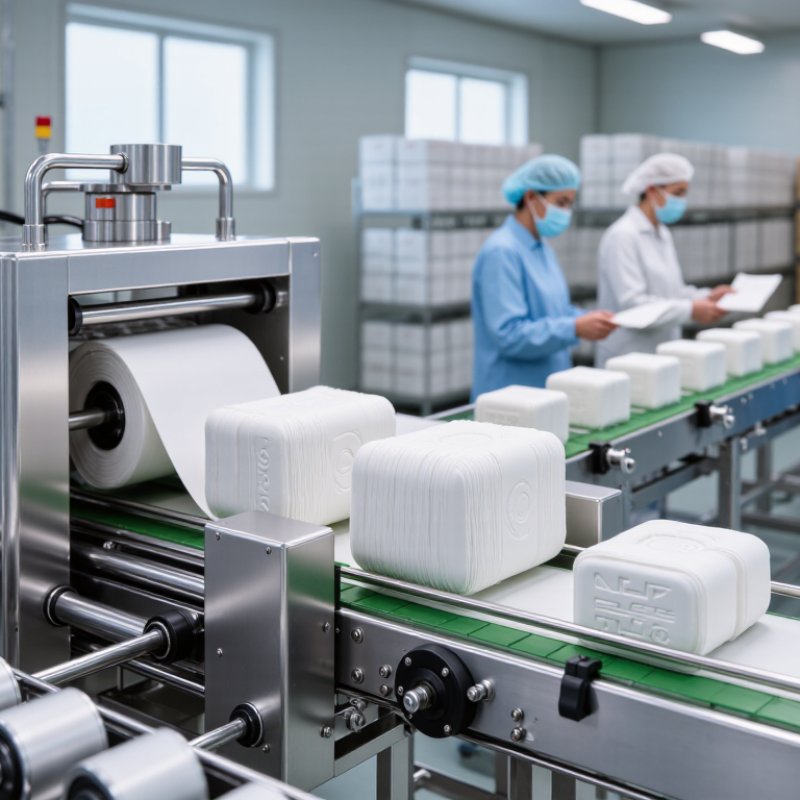
China’s sanitary napkin industry is a layered manufacturing network, not a single factory business. It starts with nonwoven fabrics, absorbent pulp, polymer materials, and breathable backsheet films. Converters then combine these inputs into products for different flows, sizes, and wearing preferences. The National Bureau of Statistics counted 689.35 million women in China at the end of 2023, a useful population reference, though not a measure of product demand.
The China National Household Paper Industry Association has reported sanitary napkin penetration at nearly 100% in China. That points to a mature category where manufacturers compete through comfort, absorbency, fit, and dependable quality—not access alone. Large producers often run automated lines and manage material sourcing at scale. Smaller specialist manufacturers may focus on flexible production or private-label orders. Distributors, pharmacies, supermarkets, and online retailers connect factories with consumers. The structure looks tidy on paper. In practice, supply costs and changing preferences can make it less predictable.
Tips: When assessing a manufacturer, ask about line capacity, material traceability, and batch testing. Request samples for day and night use. A polished specification sheet is helpful, but it cannot replace consistent production evidence.
| Industry Segment | Typical Role | Products and Capabilities | Market Positioning |
|---|---|---|---|
| Large integrated hygiene-product manufacturers | Operate multiple stages of product development, sourcing, manufacturing, quality control, and distribution. | Typically produce several sanitary-care formats, such as daytime and overnight pads, liners, and products with different absorbency or surface-material specifications. | Compete through broad distribution, product portfolios, manufacturing scale, and investment in product development. Publicly comparable capacity and market-share figures are not consistently available. |
| Specialized domestic manufacturers | Focus primarily on sanitary napkins and related feminine-care products, often serving selected consumer segments or regions. | May offer varied sizes, thicknesses, absorbency levels, topsheet materials, and packaging formats. | Often differentiate through product specialization, local distribution, pricing, or responsiveness to changing consumer preferences. |
| OEM and ODM manufacturers | Manufacture products for other businesses; OEM production follows a buyer’s specifications, while ODM services can include product design and development. | May provide contract production, packaging, product customization, and export-oriented manufacturing, depending on the facility and customer requirements. | Serve domestic and overseas buyers. Their visibility to consumers can be limited because products may be sold under a customer’s brand. |
| Regional and niche producers | Serve specific geographic markets, retail channels, or consumer niches. | May focus on selected product formats, materials, price points, or smaller production runs. | Compete through regional relationships, channel access, focused product ranges, or flexible service rather than nationwide scale. |
| Core manufacturing process | Convert raw and semi-finished materials into finished, packaged products. | Common operations include material feeding, absorbent-core formation, layer bonding, shaping, individual wrapping, and final packaging. Exact processes vary by product and factory. | Production consistency depends on equipment control, material quality, process monitoring, and finished-product inspection. |
| Supply-chain structure | Connect material suppliers, converters, manufacturers, packaging providers, logistics companies, and sales channels. | Inputs can include nonwoven materials, absorbent materials, films, release paper, adhesives, and packaging materials. | Reliable sourcing and quality management are important because product performance depends on the specifications and consistency of multiple components. |
| Quality and product standards | Manufacturers must manage product safety, hygiene, labeling, and quality requirements applicable to their products and markets. | China’s national standards include GB/T 8939-2018 for sanitary napkins and panty liners and GB 15979-2002 for disposable sanitary products. | Applicable requirements should be checked against the current standards, product category, and destination market; export products may also need to meet importing-market rules. |
| Routes to market | Products reach consumers through a mix of retail, wholesale, e-commerce, and contract or private-label channels. | Distribution arrangements vary by manufacturer and may include direct sales, distributors, retailers, online platforms, and business-to-business supply. | Channel reach is one factor in competitive position, but it does not by itself establish manufacturing capacity or product quality. |