
Why Choose a Shower Sprayer for Your Bathroom?
A bathroom upgrade does not always require new tiles, a larger tub, or a major renovation. A Shower Sprayer can change everyday routines with a compact fixture and a flexible hose. It may make rinsing shampoo easier, help direct water around the shower, and simplify cleaning corners or bathing pets. Small change. But the right choice depends on the bathroom, not just the product photos.
Sprayers come in different styles, spray patterns, hose lengths, and mounting options. Some offer a gentle rinse; others provide a more concentrated stream. More settings are not automatically better. Think about who will use the shower, how the existing fittings connect, and whether water pressure is adequate. A model that looks convenient online may feel awkward in a small stall.
Check the manufacturer’s specifications before buying, especially connection size, installation requirements, and care instructions. If the fitting does not match, an adapter may be needed; do not assume every setup is compatible. Water pressure matters, too. A low-pressure system may not deliver the strong spray shown in demonstrations. Mineral deposits can also clog spray openings over time, so easy cleaning is worth considering. It is a small detail, but an easy one to overlook. This guide explores the practical advantages, common styles, and key considerations for choosing a Shower Sprayer. The goal is not to promise a perfect bathroom, but to help you find a useful fit for your daily routine.
What Is a Shower Sprayer and How Does It Work?
Why Choose a Shower Sprayer for Your Bathroom?
What Is a Shower Sprayer and How Does It Work?
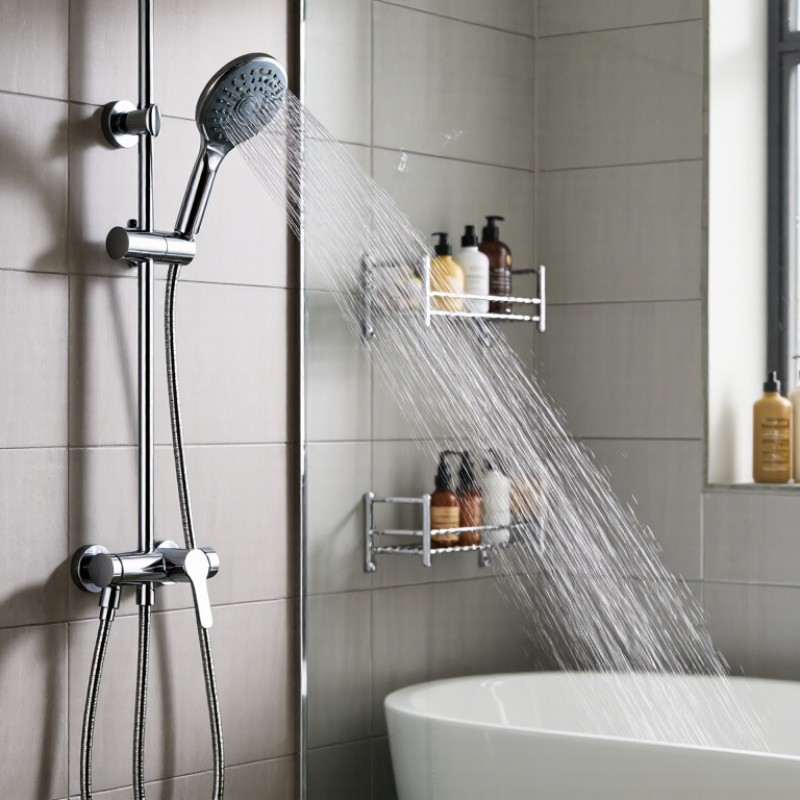
A shower sprayer is a handheld showerhead connected to a water outlet by a flexible hose. Its internal valve directs water through small nozzle openings, while a selector changes spray patterns. Squeeze the handle or lift the sprayer from its bracket, and you can rinse a child, clean the tub, or target sore shoulders. It uses your home’s existing water pressure; it does not create extra pressure. That distinction is easy to miss.
Water use depends on the model and how long the water runs. The U.S. Environmental Protection Agency’s WaterSense program sets a maximum flow of 2.0 gallons per minute for labeled showerheads; the federal standard allows up to 2.5 gallons per minute. EPA estimates a WaterSense showerhead can save an average family 2,700 gallons of water yearly. A sprayer may make rinsing easier, but a longer shower can offset some savings. Comfort and conservation need a little thought.
Tips: Check the flow rate before buying, and look for a leak-free hose connection. Keep the sprayer seated securely, especially in a busy bathroom. Hard-water deposits can clog nozzle openings, so clean them as the manufacturer recommends. Small detail. It matters. (Sources: U.S. EPA WaterSense, “Showerheads” and “Shower Better”; U.S. Department of Energy, showerhead efficiency guidance.)
| Topic | How It Works or What It Offers | Practical Benefit | Things to Consider |
|---|---|---|---|
| What a shower sprayer is | A shower sprayer is a water outlet designed to distribute water through multiple small openings, usually in a handheld or fixed showerhead. | It directs water over the body for bathing and can provide different spray patterns depending on its design. | Spray patterns and controls vary by model; check that the connection and installation suit your plumbing. |
| How water reaches the sprayer | Water flows from the household plumbing through a shower valve and pipework to the showerhead. The valve controls the flow and, in many showers, the water temperature. | A familiar control system makes it possible to adjust the shower before or during use. | Water pressure and flow can be affected by the plumbing system, the shower valve, and local water conditions. |
| Handheld sprayer | The showerhead attaches to a flexible hose and can be lifted from its bracket. A holder keeps it in place when it is not being held. | Useful for rinsing specific areas, bathing children or pets, and cleaning the shower enclosure. | Keep the hose untangled and return the sprayer to its holder after use to reduce strain on the hose and fittings. |
| Fixed showerhead | The showerhead is mounted to a shower arm and remains in a set position while water flows through it. | Offers a simple, stationary setup with fewer movable parts than a handheld sprayer. | Its position may be less convenient for targeted rinsing or cleaning than a handheld option. |
| Spray patterns | Some showerheads let users switch between patterns, such as a broad spray or a more concentrated stream. The available settings depend on the product. | Different settings can help users choose a spray that suits their preferred shower experience. | More settings do not necessarily mean better performance; controls should be easy to operate and clean. |
| Water flow and efficiency | Flow rate is commonly expressed in gallons per minute (GPM) or liters per minute (L/min). In the United States, federal standards generally limit new showerheads to a maximum of 2.5 GPM, subject to applicable rules and exceptions. | Choosing an efficient showerhead can help manage water use without changing the basic way a shower works. | Actual flow depends on the product, pressure, plumbing, and local requirements. Check current local standards before purchasing. |
| Cleaning and maintenance | Mineral deposits can build up around spray openings, especially in areas with hard water. Some showerheads have flexible nozzles or removable parts to make cleaning easier. | Regular cleaning helps keep the spray pattern more consistent. | Follow the manufacturer's cleaning instructions; abrasive tools or unsuitable chemicals may damage finishes or components. |
| Installation and compatibility | Many showerheads connect to a threaded shower arm or hose, but connection type, mounting, and required tools vary. | A compatible replacement may be straightforward to install and can update the shower without changing the entire bathroom layout. | Confirm the connection size, mounting arrangement, and local plumbing requirements. Seek qualified help if the installation involves plumbing changes. |