7 Best Pre Fan Lashes for Lash Artists to Buy?
Choosing the right Pre Fan Lashes can make a busy appointment feel more controlled. A tray should offer consistent fan shapes, clean bases, and curls that suit the client’s natural lashes. Small differences matter. A bulky base may affect placement, while uneven lengths can make a finished set look less balanced. The best option depends on your technique, preferred mapping style, and the look your client wants.
This guide compares seven options for lash artists, with attention to practical details such as fiber feel, curl and length ranges, tray layout, and value. Product descriptions can be useful, but they do not tell the whole story; check current specifications and assess each tray before using it on a client. Consider how easily the fans lift from the strip and whether their bases sit neatly during application. Not every popular tray will suit every artist. I would also look twice at claims that sound impressive but lack clear product details. A little skepticism helps.
Whether you are building a starter kit or refining a salon setup, this shortlist can help narrow your choices. It is not a substitute for sound application training or careful client consultation. The goal is a reliable match—not a perfect tray for everyone.
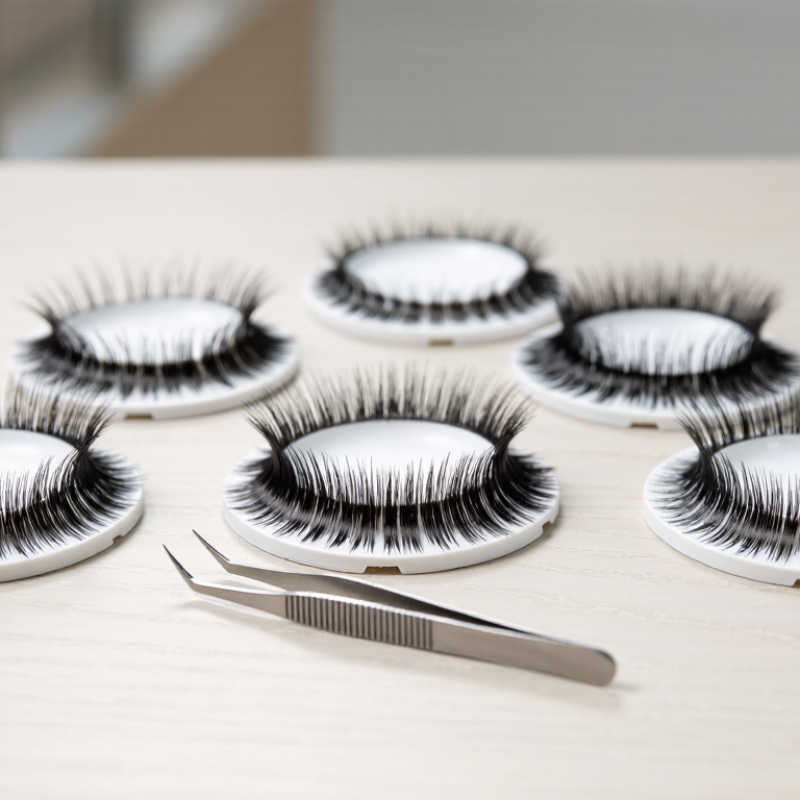
What Pre-Fanned Lashes Are and How Lash Artists Use Them
Pre-fanned lashes are small lash fans made before application, with several extensions joined at the base. Unlike handmade fans, they arrive ready for placement. Artists select a length, curl, and fan width to suit the client’s natural lashes and desired style.
Small fans. Faster placement.
During an appointment, the artist isolates one natural lash, picks up a fan with tweezers, and applies a controlled amount of adhesive at its base. Careful isolation helps prevent neighboring lashes from sticking together. Fans can be placed along a planned map, with shorter lengths near the inner corner and longer ones where the design calls for them. They are not magic. Poor placement or a fan that is too heavy can compromise comfort and retention, so the natural lash’s condition should guide the choice.
The market context is growing, though it does not measure pre-fanned lashes specifically: Grand View Research estimated the global false eyelashes market at USD 1.6 billion in 2023, with projected growth from 2024 to 2030. This broad category includes products beyond salon extensions. For lash artists, pre-fanned trays may help make application more consistent, but results still depend on isolation, adhesive control, hygiene, and training. Follow the adhesive manufacturer’s directions, keep adhesive away from skin and eyes, and check each client’s suitability before treatment.
Key Factors to Consider When Choosing Pre-Fanned Lash Trays
When choosing pre-fanned lash trays, check the fan shape before focusing on price. Even spacing between fibers helps create a neat, balanced result. Look for narrow, tidy bases that are easy to pick up without bending. A bulky base can make placement feel less controlled. Small detail, big difference.
Match curl, length, and diameter to the client’s natural lashes and the intended design. A tray with several lengths can support gradual transitions across the lash line, while consistent labeling makes refills less confusing. Check that fans stay intact when lifted from the strip. If they twist or close easily, pause and test your pickup method before using them on a full set. The adhesive strip matters, too: it should hold fans securely but release them without a tug-of-war.
Consider how the tray fits your daily workflow. Clear rows, readable labels, and a lid that closes firmly can prevent mix-ups at a busy station. Inspect the fibers under good lighting; uneven curls or visibly different fan widths may stand out after application. No tray is perfect. Some fans may need adjusting, and that is worth allowing time for. Follow the product’s directions, keep tools clean, and avoid letting extensions contact the client’s eyes.
7 Best Pre-Fan Lashes for Lash Artists to Buy? Key Factors to Consider When Choosing Pre-Fanned Lash Trays
Example Lash Length Options (mm)
Pre-fanned trays are available in a range of lengths. When choosing a tray, check its length, curl, diameter, fan size, and material, then select extensions that suit the client’s natural lashes and desired look. The lengths shown are examples, not a ranking or a recommendation for every client.
Seven Pre-Fanned Lash Options for Different Client Needs
Pre-fanned lashes are not one-size-fits-all. A short, narrow fan can suit clients who want a soft outline, while wider fans create more visible density on suitable natural lashes. For a subtle set, consider fine fans in shorter lengths and a curl that follows the client’s natural direction. For a more defined look, medium-width fans may add texture without making every section appear equally heavy. Dramatic fans are an option, but only when the natural lashes can support the chosen extension safely. Check the base, fan symmetry, and curl under good light; a neat tray does not guarantee a balanced result on the eye.
Client demand is one reason artists keep a range of styles available. Grand View Research estimated the global eyelash extension market at USD 1.6 billion in 2023 and projected a 6.5% compound annual growth rate from 2024 to 2030. That market figure covers extensions broadly, not pre-fanned styles specifically, so it cannot tell artists which fan will work best. Fit matters more than trend. One easy mistake is choosing fans by tray appearance alone. Compare lengths against the client’s natural lashes, assess comfort during application, and follow the manufacturer’s directions for adhesive and isolation. I would not treat any “best” list as universal; preferences and lash strength vary, and sometimes the lighter choice looks better.
How to Compare Curl, Length, Fan Width, and Base Design
Pre-fan lashes can save setup time, but the wrong specifications may slow an application down. Compare curl with the client’s natural lashes and desired result. A strong curl can look striking, yet it may not blend smoothly with straighter natural lashes. Check a few fibers from the tray under bright light. Small differences matter.
Length should suit the natural lash and the planned map, not just the look in a product photo. Longer fibers add drama but also weight, so assess their suitability for each client’s natural lashes. Fan width affects density: narrow fans create a lighter finish, while wider fans can look fuller. They may also feel crowded on smaller eyes. Keep the design wearable.
Base design deserves close attention. A slim, tidy base is generally easier to place along the lash line; a bulky base can leave visible gaps or make attachment awkward. Check whether the fibers separate cleanly and whether the base sits flat when picked up with tweezers. Ask for clear specifications or a sample tray when available. I still find that photos can hide base thickness. Test placement before committing to a full set, and note how the fan behaves with your usual adhesive and pickup technique.
Best Practices for Applying and Caring for Pre-Fanned Lashes
Pre-fanned lashes save time, but their bases still need careful placement. Start with clean, fully dry natural lashes, then isolate one natural lash at a time. A fan should sit evenly without touching the eyelid or sticking to neighboring lashes. Use a small amount of adhesive; a heavy bead can weigh down the fan and create visible clumps. Check the room’s temperature and humidity against the adhesive instructions, since setting conditions vary. Keep the client’s eyes closed, and pause if they sting or water. Small details matter.
After application, inspect the lash line from several angles and gently separate any bonded lashes with clean tweezers. A 2013 review in Clinical Ophthalmology described 107 reported cases of eye problems associated with extensions; allergic blepharitis was reported in 64. These figures describe reported cases, not the chance that any client will react, but they support careful screening and hygiene. Ask about previous sensitivity, and do not apply lashes over irritated skin. For home care, recommend gentle daily cleansing with a lash-safe cleanser and no rubbing or picking. Dry by patting, not pulling. Follow the adhesive maker’s curing guidance rather than promising a fixed wait time. If redness, swelling, pain, or vision changes develop, the client should seek medical advice. I still see artists rush the final check. That is worth reconsidering.
Related Posts
-
Unlocking the Glam: Unique Benefits of Glitter Lashes for Stunning Eye Impact
-
7 Essential Tips for Choosing the Perfect Diamond Lash for Your Look
-
Top Benefits of Bulk Lashes: How to Choose the Best for Your Business
-
7 Reasons Why Best Classic Eye Lash Is the Must Have Choice for Stunning Eyes
-
2025 Market Insights: Unveiling Trends and Projections for Best High Quality Lashes Worldwide
-
2026 Top Diamond Lash Suppliers for Global Buyers?